
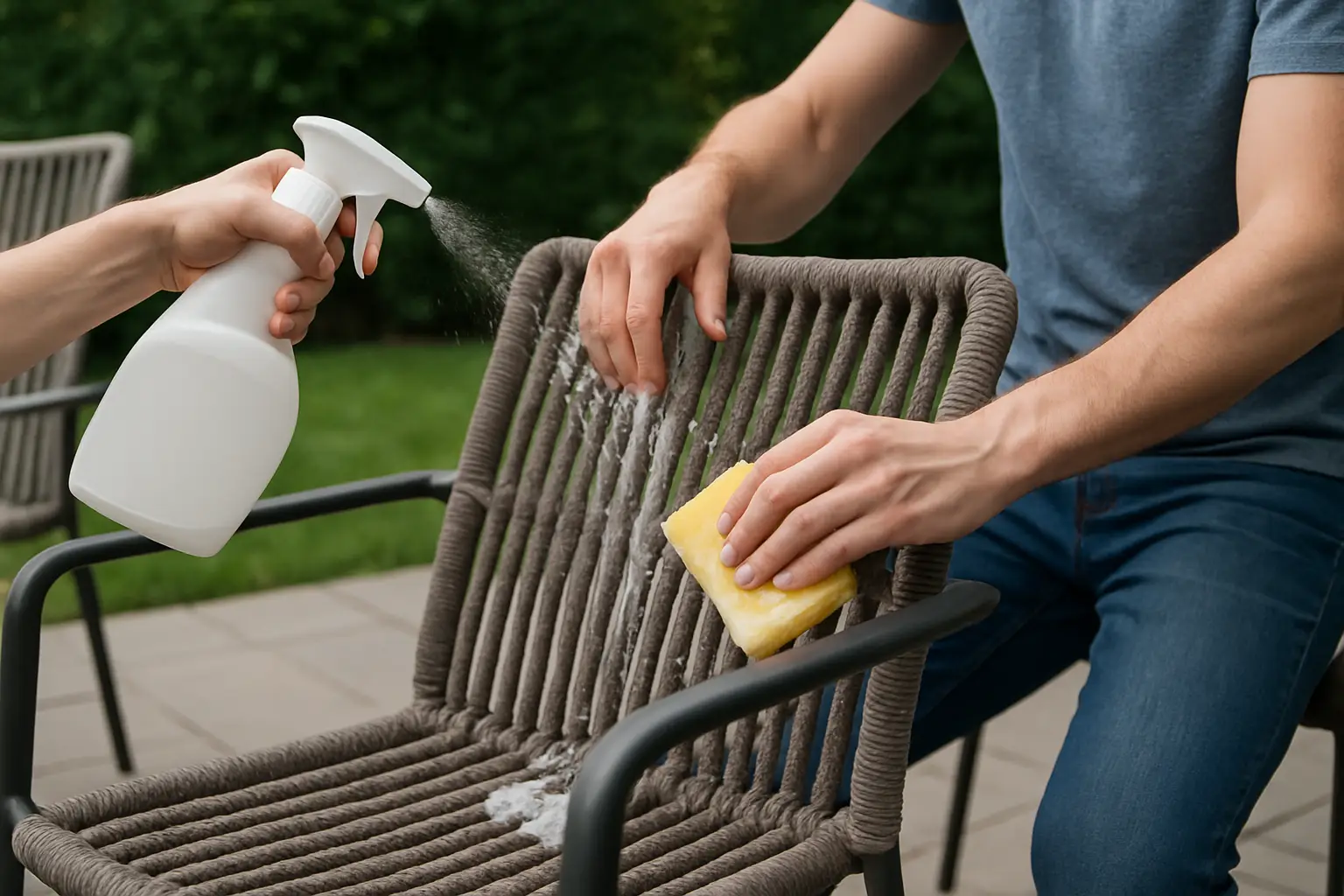
Salt spray on a rooftop lounge. Sunscreen and spills on poolside sofas. Windblown dust that turns into a gray film after the first humid weekend. Outdoor rope furniture looks high-design and relaxed, but it also sits right where mess happens – and where maintenance gets judged fast in hospitality and multi-unit settings.
If you are responsible for keeping terraces, villas, or F&B patios presentation-ready, cleaning rope is less about “making it look nice” and more about protecting fiber integrity, keeping hand-feel consistent, and avoiding the one thing operators hate: mildew that comes back in two weeks. Here is how to clean outdoor rope furniture in a way that is repeatable, spec-friendly, and gentle enough for contract environments.
What rope furniture is really made of (and why it matters)
Outdoor “rope” is usually a synthetic fiber (often polypropylene, olefin, or polyester) wrapped or braided around a core. The exact blend varies by supplier and collection. Some ropes have tighter weaves that resist snagging but trap fine dust; others feel softer but can fuzz if scrubbed aggressively.
Two details drive your cleaning approach: how absorbent the rope is and how open the braid is. Rope does not behave like sling fabric, and it does not behave like solid resin. It is a textured surface with hundreds of micro-contact points. That texture is the look – and it is also where airborne grime, body oils, and algae spores settle.
If your installation is near pools or coastlines, expect salt and chlorine residue to speed up soiling. If the site is shaded with limited airflow, expect mildew pressure to be higher. Cleaning frequency is not one-size-fits-all – it depends on exposure.
Before you start: confirm what you are cleaning
Most rope furniture sits on an aluminum or steel frame with powder coating, paired with rope plus cushions. Clean the system, not just the rope.
Do a quick check for: loose strands, fraying at high-contact points (arm tops, chair backs), and any areas where the rope is rubbing against a sharp frame edge. If you see abrasion, cleaning will not fix the underlying cause. You will want to adjust placement, add glides, or flag it for repair before it becomes a warranty conversation.
Also identify the stain type. Routine dust and sunscreen come out with mild detergent. Mildew may need a targeted approach. Rust marks often migrate from nearby metal hardware or irrigation water and can require different treatment entirely.
How to clean outdoor rope furniture without damaging fibers
The safest baseline process uses low chemistry, low pressure, and a controlled dry-down. That combination keeps the rope from fuzzing, stretching, or trapping moisture.
Step 1: Dry removal first
Start by removing loose debris. Use a soft brush or a vacuum with a brush attachment to lift dust from the braid. This matters because wet-cleaning over grit turns your brush into sandpaper.
If you are cleaning at scale (restaurant patio resets or a resort turnover), dry removal is the step that improves consistency across pieces. It reduces the amount of soap you need and cuts rinse time.
Step 2: Mix a mild wash solution
Use lukewarm water and a small amount of pH-neutral dish soap or a mild upholstery detergent. You want enough surfactant to break oils, not a heavy foam that takes forever to rinse from a braided surface.
Avoid harsh degreasers, solvent cleaners, and highly alkaline products unless the manufacturer specifically approves them. They can strip color, stiffen the rope hand-feel, or accelerate surface wear.
Step 3: Gentle agitation, with the braid
Dip a soft-to-medium nylon brush into the solution and scrub along the direction of the rope pattern. Short strokes work better than aggressive back-and-forth. The goal is to lift grime out of texture, not to “abrade clean.”
Give extra attention to contact zones: arm rests, seat edges where guests grip, and the top of chair backs. Those areas accumulate skin oils that attract dust, which is why the rope can look darker even without obvious stains.
If the rope is a lighter color, work in small sections and rinse as you go. Soap that dries in place can leave a visible film.
Step 4: Rinse thoroughly, using low pressure
Rinsing is where many teams accidentally create problems. A pressure washer can force dirt deeper into the braid or disrupt the rope tension over time. Instead, use a garden hose with a gentle spray setting.
Keep the nozzle at a reasonable distance and let water flow through the braid until it runs clear. If you still see suds after 30 seconds of rinsing a section, keep going. Residual detergent is a magnet for future dirt.
Step 5: Dry for airflow, not speed
Moisture trapped inside braided rope is the main driver of recurring mildew. Towel-blot where you can, then position pieces for airflow. If possible, move chairs slightly apart and avoid stacking while damp.
In humid climates, a fan in a service corridor or covered patio can help. What you do not want is “looks dry on the surface” while moisture remains inside the rope. That is how a clean set turns musty.
Mildew and organic spots: what to do when mild soap is not enough
If you smell mildew or see speckled spotting, treat it quickly. Mildew can stain rope and may migrate to nearby cushions.
Start with the baseline wash above. Often, that removes the surface layer. If staining remains, use an oxygen-based cleaner (the type that releases oxygen in water) at a diluted concentration, then test on an inconspicuous area first. Apply, lightly agitate, and rinse extremely well.
Avoid chlorine bleach on rope unless the manufacturer explicitly approves it. Bleach can weaken fibers and cause uneven lightening, especially on solution-dyed colors that still have surface finishes.
Also address the environment. If the furniture is stored under a cover with minimal airflow, you are essentially creating a condensation chamber. Covers are useful, but only when the furniture is dry and the cover allows ventilation.
Tough stains you will see in real projects
Rope furniture in hospitality is exposed to a predictable set of offenders. The cleaning approach depends on what bonded to the fiber.
Sunscreen and body oils respond to warm soapy water and patience. Repeated light cleaning beats one aggressive scrub.
Food and beverage spills should be flushed early with clean water, then washed. Sugars left in the braid attract insects and create sticky soil.
Hard water marks often appear after sprinkler cycles or coastal mist. If you see a chalky residue, a mild vinegar-and-water solution can help, but only after testing. Vinegar is acidic and can affect adjacent metal finishes if left to dwell. Apply carefully, rinse thoroughly, and keep it off powder-coated joints.
Rust streaks usually come from nearby hardware, planters, or steel accessories. Do not attack rust with abrasive pads. Identify the source first, then use a rust remover approved for textiles, spot-test, and rinse. If the source remains, the stain will return.
What not to do (these are the shortcuts that create callbacks)
Some “fast” cleaning methods look good for a day and then cost more in replacement and labor.
Do not use a pressure washer at close range. It can loosen braid tension, lift protective coatings, and push grime deeper.
Do not saturate rope and then cover it. That is a mildew guarantee.
Do not use stiff wire brushes or abrasive pads. They fuzz the rope surface and make future cleaning harder because the texture becomes more open.
Do not apply oily protectants that are not designed for synthetic rope. They attract dust and can discolor light tones.
A maintenance rhythm that works for commercial sites
Cleaning rope furniture should be scheduled like any other asset care program, not treated as an emergency.
For high-traffic hospitality (pool decks, beach clubs, restaurants), a light weekly wash-down with water and periodic mild-soap cleaning keeps the rope from loading with grime. Monthly deep cleans are common in humid or coastal zones.
For residential villas and rooftops with moderate use, seasonal deep cleaning with quick spot-cleaning in between is typically enough – unless the site sits near construction or heavy road dust.
After any major event or peak weekend, assign a quick inspection: check for sticky spots, bird droppings, and wet cushions that may have transferred moisture into the rope.
Procurement and spec notes: cleaning starts before delivery
If you are specifying rope furniture for a project, cleaning effort is part of total cost of ownership. Darker rope colors can hide dust but show salt residue. Lighter colors look premium but may require more frequent attention. Open braids feel airy but can trap fine sand. None of these are deal-breakers – they are spec decisions that should align with the site.
Also plan for access to water and drainage. A beautiful rooftop without a practical wash-down point forces teams to improvise, and that is when the wrong chemicals and tools show up.
If you are outfitting multiple zones (lounge, dining, poolside), standardize the cleaning kit and the process so teams do not guess. When you keep materials consistent across SKUs, maintenance becomes a routine rather than a project.
For teams sourcing at scale and coordinating finish selections, rope colors, and full outdoor packages under one vendor, PNZ International supports contract-grade specifications and project execution from design support through delivery, which helps keep material choices aligned with real operating conditions.
Closing thought: clean rope furniture the way you would manage any high-visibility surface in a commercial environment – with gentle chemistry, disciplined rinse and dry, and a schedule that prevents buildup instead of chasing it.
