
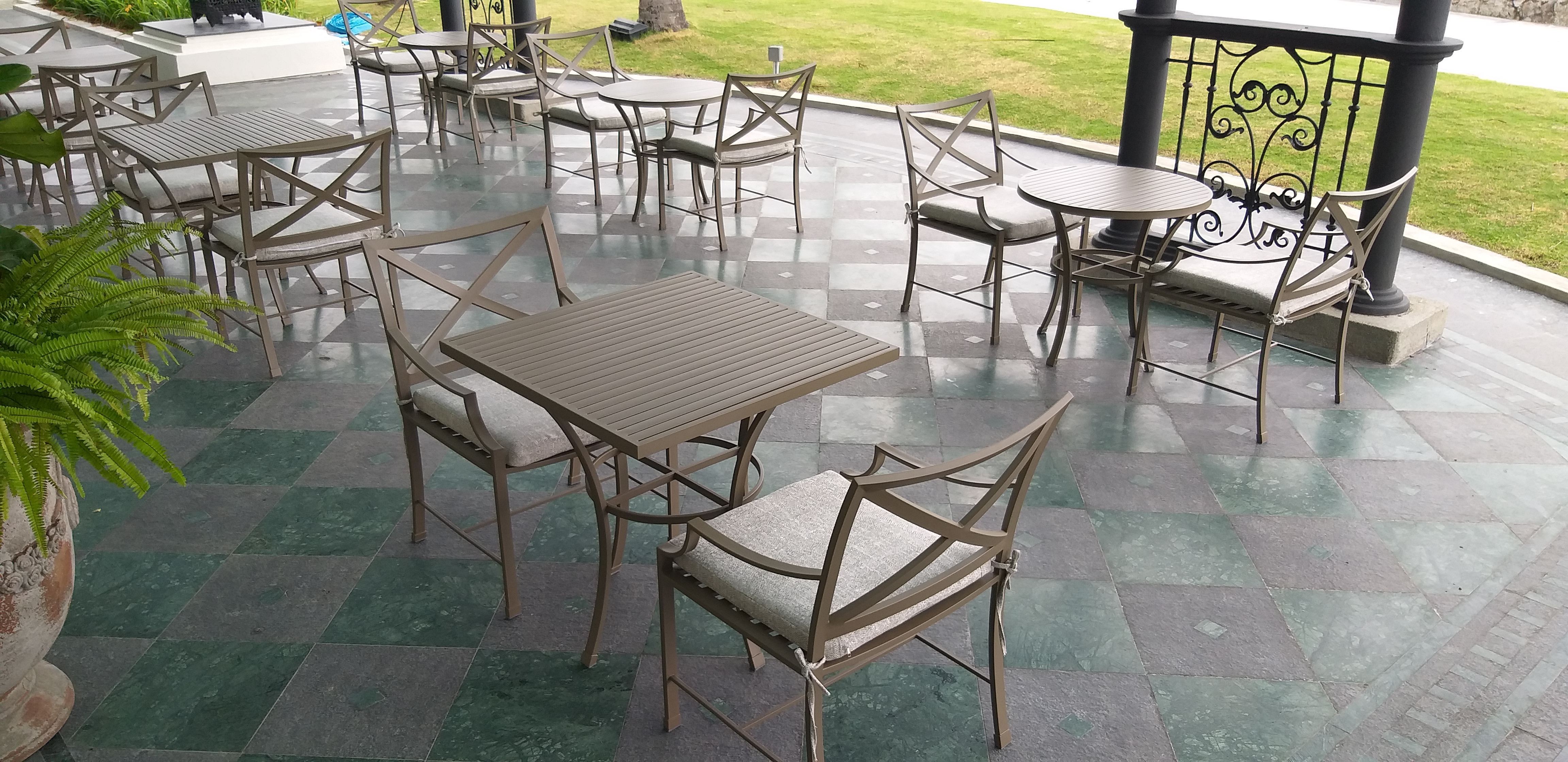
A patio dining set can look perfect in a showroom and fail fast on a restaurant terrace. The difference is almost never the style – it is the spec. If you are furnishing a rooftop dining area, hotel breakfast patio, or high-turnover cafe, you are not buying “furniture.” You are buying a workload: UV, salt air, stacked chairs, nightly wipe-downs, and guests who drag tables without lifting them.
This commercial patio dining set review is written for specifiers and procurement teams who need fewer surprises after install. It focuses on what actually moves outcomes: frame engineering, finish systems, replaceable components, and delivery reliability. The best set for your project depends on your climate, service style, and whether you need to standardize across one venue or fifty.
What “commercial” should mean in a patio dining set
Commercial-grade is not a marketing adjective. In contract environments, it should translate into predictable performance under repeat stress. You want stable tables that do not rack over time, chairs that keep their fasteners tight after months of dragging, and surfaces that do not become a maintenance project.
A commercial set should also be spec-friendly: consistent color lots, documented materials, and a finish you can reorder later without guessing. For hospitality operators, another “commercial” requirement is continuity – if a chair is damaged mid-season, you need matching replacements without redoing the whole patio.
The real evaluation criteria (beyond the photo)
If you have ever had a patio look great on day one and tired by month three, it was usually one of four things: wrong material for the environment, insufficient finish protection, weak joints, or procurement shortcuts that made replacements impossible. The following criteria are what we use when reviewing dining sets for commercial use.
Frame material: aluminum, steel, stainless, teak, and resin
Aluminum is the default choice for many commercial patios because it balances weight, corrosion resistance, and cost. The key is the wall thickness, weld quality, and how the frame is reinforced at load points like chair back connections and table legs. Thin aluminum can feel fine at first and loosen over time.
Powder-coated steel can work well when it is engineered correctly, but it is less forgiving in coastal or high-humidity environments. Once steel is scratched through the coating, rust can spread under the finish. If your concept requires steel, the finish system and edge coverage matter more than the style.
Stainless steel is a premium option when you need a sharper architectural look and long-term corrosion resistance. It is not automatically “set and forget,” especially near salt water. Grade selection and surface treatment affect staining and tea discoloration, and stainless can show scratches in high-contact settings.
Teak and other hardwoods can be excellent for hospitality, but commercial success depends on whether you accept patina. Teak will silver out, and if your brand standard requires a consistent warm tone, you are committing to a maintenance schedule. The upside is comfort, a high-end feel, and the ability to refinish.
Resin and composite frames are common for value-driven projects and poolside dining. They can be surprisingly durable, but you should check for UV stabilization, brittleness over time, and weight. Lightweight resin chairs can wander in wind and feel less premium in upscale venues.
Finish system: powder coat is not one thing
A powder coat is only as good as the pretreatment beneath it. For aluminum, proper cleaning and conversion coating make a measurable difference in adhesion and corrosion resistance. For steel, you want strong edge coverage and a system that resists chipping at corners.
In review terms, the best commercial sets are the ones where you can specify the finish confidently: color consistency, outdoor rating, and realistic expectations around touch-ups. If your patio staff will stack chairs nightly, a finish that chips easily becomes a recurring operational cost.
Joint design: where most sets fail
Dining chairs do not “wear out” evenly. They fail at joints first. Look for welded structures where appropriate, or for knock-down designs that use quality hardware with thread-locking strategies. Avoid designs that rely on small fasteners in high-stress areas without reinforcement.
For tables, pay attention to base stability and anti-wobble solutions. A slightly uneven terrace is normal in real life. If the table cannot be leveled easily, your staff will improvise with napkins, guests will notice, and your brand experience takes a hit.
Tabletop choices: specify for cleaning, heat, and impact
Tabletops are where commercial reality shows up fastest. Here is how the most common options tend to perform.
HPL (high-pressure laminate) is practical for many restaurant patios because it cleans quickly and offers consistent aesthetics. Performance depends on edge sealing and UV stability. Poorly sealed edges can swell or separate after repeated cleaning and weather exposure.
Sintered stone and porcelain tops deliver a premium look and strong scratch resistance, but they are heavier and can chip at edges if mishandled. If your team frequently reconfigures layouts, weight and handling become part of the review.
Tempered glass offers easy wipe-downs and a clean look, but it shows smudges and can feel cold in experience-driven dining environments. It can also create glare in sunny climates.
Solid wood tops can be beautiful, but they move with moisture and require a maintenance plan. For some hospitality concepts, that patina is part of the story. For others, it reads as “aging.”
Stackability and footprint: the hidden cost driver
For many operators, stackable chairs are not optional. They reduce labor time during cleaning and help you compress storage in off-hours or off-season. But stackability can introduce scuffing at contact points and can loosen hardware faster if the chair is not designed for it.
A strong commercial set anticipates stacking with protective spacers, durable touch points, and a finish that can take repeated contact. If you are specifying a non-stack chair for aesthetic reasons, plan for storage and labor up front, because the ongoing cost is real.
Commercial patio dining set review by category
Different venues reward different specs. A resort pool bar does not stress furniture the same way as a high-turnover breakfast terrace, and neither behaves like a wind-exposed rooftop.
Restaurants and cafes: speed, stability, and replaceability
For food service patios, the best-performing sets usually combine aluminum frames with durable, easy-clean tabletops. You want chairs that remain tight and quiet – squeaks and wobble are guest-facing issues. Replaceable glides are a must because chairs get dragged constantly.
If your seating plan changes often, prioritize table bases that can be re-leveled and moved without scratching. A beautiful top on a weak base becomes an annoyance within weeks.
Hotels and resorts: brand consistency and finish longevity
Hospitality patios tend to demand a more elevated look, but they also face long daily exposure and aggressive cleaning schedules. Here, finish quality matters as much as material choice. If you need a cohesive aesthetic across dining, lounge, and pool zones, standardizing colors and materials reduces future procurement friction.
Resorts also benefit from modularity: the ability to reorder matching pieces and keep the design language consistent through refresh cycles.
Rooftops and coastal terraces: wind, salt, and UV
Rooftops introduce wind load and increased movement. Lightweight chairs can become a safety issue, and lightweight tables can drift out of alignment. Coastal environments punish poor finish systems and untreated hardware.
In these settings, the “review” should be conservative. Favor corrosion-resistant materials, tested coatings, and designs with fewer exposed fasteners. If you want steel or mixed materials for a specific look, specify a finish system that matches the environment, not just the mood board.
What to ask suppliers before you sign off
A commercial patio dining set is only as dependable as the supplier supporting it. Beyond the product spec, the procurement questions determine whether you can execute on schedule and maintain the install.
Ask how color consistency is managed across batches, and whether the supplier can support a defined reorder window. Confirm what is actually replaceable: glides, cushions, slings, tabletops, and hardware. Clarify lead times for replenishment, not just the initial order.
If you are building at scale, request pre-production confirmation such as finish samples and a mock-up. This is where many projects either lock in confidence or discover mismatch risk.
For teams that need concept-to-install support, a vertically integrated partner can reduce handoffs. PNZ International supports commercial outdoor projects with contract-grade manufacturing, large-SKU coverage, and in-house services like 3D drawings and mock-up approvals, which is often what keeps multi-site rollouts consistent.
Trade-offs that are worth deciding early
Most “bad” outcomes come from undecided trade-offs. If you want a matte black finish, are you comfortable with visible scuffs in a high-traffic cafe, or do you need a textured coating that hides wear? If you want wood warmth, are you prepared for a patina story, or do you need a wood-look surface that stays consistent with minimal maintenance?
Weight is another early decision. Heavier sets feel premium and resist wind, but they cost more to ship and are harder for staff to move daily. Lighter sets make nightly cleaning easier, but they need more stability engineering to avoid wobble and drift.
Finally, decide whether your priority is lowest upfront cost or lowest cost per season. Commercial patios punish false economies, especially when replacements do not match and you end up re-buying entire zones.
A simple way to sanity-check your selection
Picture the set three months after opening. Imagine the chairs being dragged 200 times a day, wiped with cleaning solution nightly, and left in sun and occasional rain. If the finish, joints, and tabletops still make sense in that mental test, you are close.
If the set only makes sense when everything is treated gently, it is probably a residential set wearing commercial styling.
Closing thought: the most successful commercial patios are not the ones with the most expensive furniture – they are the ones where the furniture spec matches the way the space is actually operated.
