
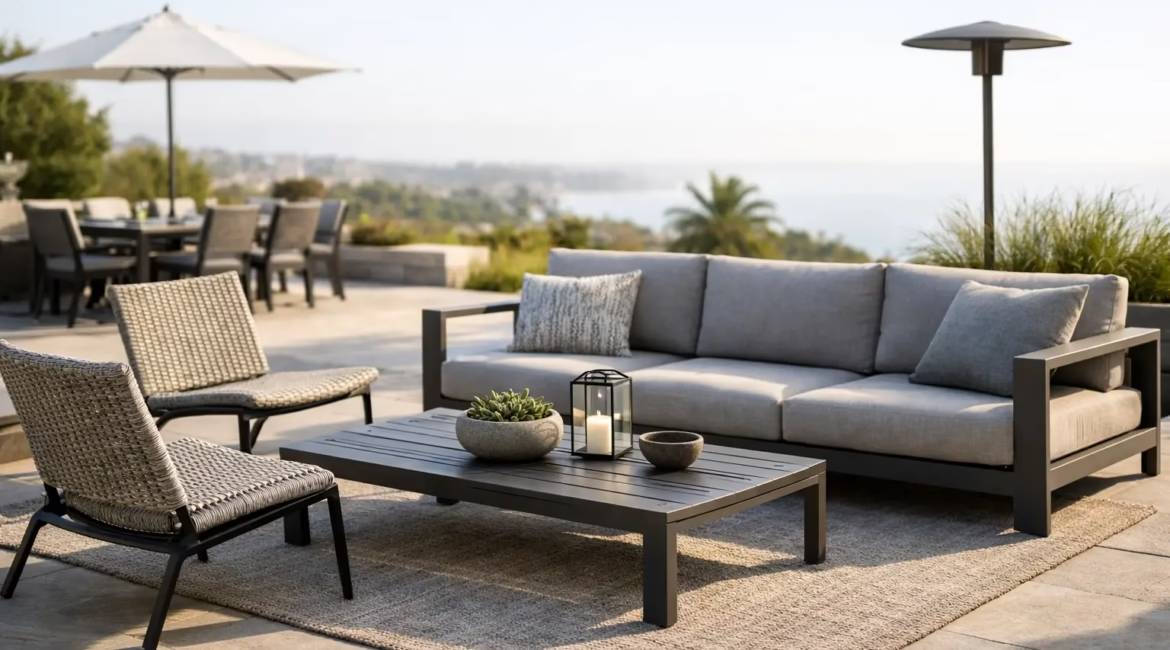
A rooftop lounge can look finished on install day and start failing by the first busy season. Cushions flatten. Finishes fade unevenly. Frames loosen under constant use. For commercial and hospitality projects, that gap between showroom appeal and field performance is exactly why buyers ask a more specific question: what is contract grade outdoor furniture?
The short answer is that contract-grade outdoor furniture is built and specified for repeated use in demanding environments. That includes hotels, restaurants, resorts, multifamily amenities, commercial terraces, pool decks, and high-traffic residential developments. It is engineered with stronger materials, more consistent manufacturing standards, and performance requirements that go beyond what most retail outdoor furniture is designed to handle.
That does not mean every contract-grade piece looks heavy or purely utilitarian. In a well-run supply program, it should deliver both design value and operational durability. The real difference is not the label. It is whether the furniture can hold up to the traffic, climate, maintenance cycles, and replacement expectations of a professional project.
What is contract grade outdoor furniture?
Contract grade outdoor furniture is furniture manufactured for commercial, hospitality, and large-scale residential applications where performance, consistency, and serviceability matter as much as appearance. It is intended for environments where the same chair may be used hundreds of times a week, where UV exposure is constant, and where procurement teams cannot afford frequent failures across dozens or hundreds of units.
In practice, contract grade usually means more rigorous material selection, stronger frame construction, better-tested finishes, and tighter production control. It also often comes with broader specification options such as custom finishes, fabric programs, replacement components, and project support documentation.
For procurement teams and designers, the term matters because it signals a different standard of buying. You are not just selecting furniture that looks right in a rendering. You are sourcing a product line that needs to perform on site, across timelines, budgets, and warranty expectations.
Why contract grade matters in outdoor projects
Outdoor environments expose furniture to more than sun and rain. Pool chemicals, coastal air, wind load, sand abrasion, and daily cleaning routines all affect long-term performance. Add heavy guest turnover or public use, and weak construction becomes expensive very quickly.
That is where contract-grade specification protects the project. A dining chair for a resort terrace needs to maintain structural integrity, finish quality, and visual consistency long after opening day. A poolside lounger must resist corrosion, dry quickly, and tolerate constant movement. A rooftop sectional has to balance design impact with frame stability and fabric performance.
Retail-grade pieces can work in low-use private settings, but they often struggle in professional applications. The initial savings may look attractive, yet the replacement cycle, labor disruption, and brand impact can cost far more over time. For hospitality operators and developers, durability is not just a product feature. It is an operating decision.
How contract grade differs from retail outdoor furniture
The biggest difference is use case. Retail outdoor furniture is typically developed for individual consumers and moderate use. Contract grade is developed for repeated use, larger order quantities, and more demanding service conditions.
That difference shows up first in construction. Contract-grade frames are commonly built with heavier-gauge aluminum, stainless steel in the right applications, or carefully selected teak and performance composites. Joinery tends to be stronger. Welds, fasteners, and support points are designed to handle frequent movement and occupancy.
The second difference is finish performance. A powder-coated frame may look similar online whether it is residential or contract grade, but not all coatings are equal. Surface prep, coating thickness, curing quality, and environmental testing all affect how well that finish stands up to UV, humidity, and cleaning chemicals.
The third difference is consistency at scale. For a commercial project, buyers need the 50th chair to match the first, and the second shipment to match the first install. That requires manufacturing control, repeatable specifications, and supplier coordination. It is one thing to buy four attractive chairs for a backyard. It is another to furnish a hotel, multiple villas, or a mixed-use development with finish continuity and on-time delivery.
The materials behind contract-grade performance
Materials do a lot of the work in outdoor furniture performance, but the right choice depends on the project. There is no single best material for every site.
Aluminum is a common contract-grade choice because it is lightweight, rust-resistant, and suitable for many hospitality and residential applications. When engineered properly, it offers a strong balance of corrosion resistance and ease of handling. That matters for venues that reconfigure layouts often.
Teak remains a strong option for projects that want a natural look and proven outdoor durability. It performs well outdoors, but buyers should go in with clear expectations. Teak ages to a silver-gray patina if left untreated, and maintenance plans should align with the desired appearance.
Synthetic wicker and performance rope can also be contract appropriate when specified correctly. The key is not the category itself but the grade of the fiber, UV stability, tension retention, and how it is applied over the frame. Lower-grade woven materials may crack, sag, or fade too quickly in high-heat environments.
Outdoor fabrics and cushion fills matter just as much as frames. Commercial settings need fabrics with strong fade resistance, mildew resistance, and cleanability. Cushion construction should support drainage and drying speed, especially around pools and beachfront properties.
What buyers should ask before specifying it
If you are sourcing for a hospitality, multifamily, or commercial project, the better question is not simply whether a piece is contract grade. Ask how that claim is supported.
Start with frame material, wall thickness, and finish process. Ask what the furniture is designed to withstand and where it performs best. A supplier should be able to explain whether a collection is better suited for covered dining, open pool decks, coastal settings, or rooftop exposure.
Then ask about customization and replacement support. Commercial projects rarely run on off-the-shelf logic alone. You may need fabric options, finish matching, mock-up approvals, or the ability to standardize a collection across multiple sites. You should also know whether replacement cushions, slings, or spare parts can be supplied later.
Lead time and fulfillment capacity are equally important. A well-designed chair is only useful if it arrives on schedule and in spec. For larger projects, manufacturing scale, quality control, and logistics coordination are part of the product decision, not separate from it.
Why supplier capability matters as much as the furniture
Contract-grade outdoor furniture is not only about the item itself. It is also about the supplier’s ability to execute. Designers, developers, and procurement teams are managing budgets, approvals, installation schedules, and often multiple stakeholders. Delays or inconsistencies create pressure across the whole project.
That is why vertically integrated partners often bring an advantage. When design development, manufacturing, quality oversight, and logistics are aligned, the process is easier to control. It becomes more realistic to coordinate custom dimensions, material swatches, 3D drawings, mock-up approvals, and bulk delivery without losing time between vendors.
For buyers furnishing full outdoor environments, that matters across every category. Lounge seating, dining furniture, poolside pieces, shade solutions, and accessories all need to work together visually and operationally. A single-source partner with real production capacity can reduce procurement friction and improve specification consistency.
This is also where experienced suppliers separate themselves from traders. A trader may sell attractive products. A project partner can support design intent, manage quantity requirements, and deliver reliably at commercial scale. For many B2B buyers, that difference is what protects timelines and margins.
When contract grade is worth the investment
Not every outdoor purchase needs contract-grade specification. A lightly used private patio may not require it. But once the project involves high traffic, guest turnover, brand standards, or multi-unit purchasing, contract grade usually becomes the smarter financial choice.
The value shows up in longer service life, fewer replacements, more predictable maintenance, and better presentation over time. It also supports cleaner procurement. Instead of patching together products from multiple sources, teams can specify with more confidence and maintain consistency across phases or properties.
For project-driven buyers, the real question is not whether contract-grade outdoor furniture costs more upfront. It is whether lower-grade furniture can afford to fail in the setting you are building. In most commercial environments, the answer is no.
At PNZ Space Global, that is why contract-grade outdoor furniture is approached as a full project solution, not just a product category. The right specification should support design goals, stand up to use, and arrive with the operational discipline serious projects require.
If you are evaluating outdoor furniture for a hotel, restaurant, multifamily amenity, or large residential development, look past the styling first impression. The better buy is the one that still performs when the space is busy, the weather is harsh, and the opening date cannot move.
