
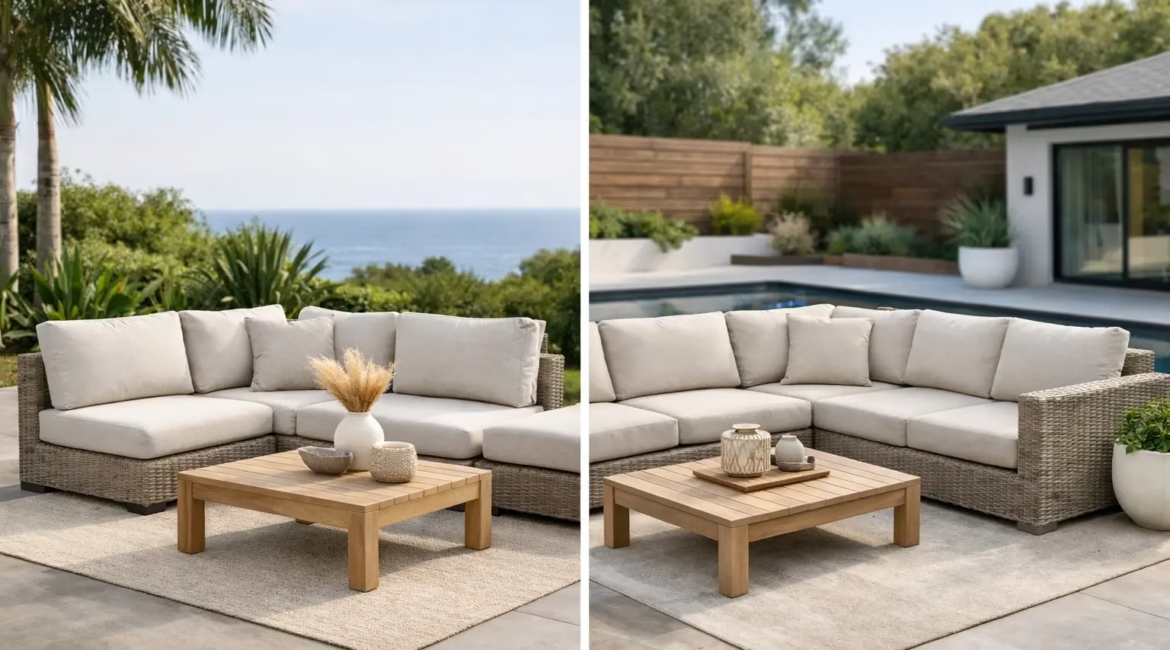
A sectional that looks right on a mood board can become a problem the minute it reaches the site. The corner radius clips a walkway, the terrace access is tighter than expected, or the operator wants to rework seating density after opening week. That is why the modular vs fixed outdoor sectional decision matters early – not after procurement is locked.
For designers, developers, hospitality buyers, and project teams, this is less about style preference and more about specification control. The right choice affects layout flexibility, installation risk, storage, maintenance planning, and long-term asset value. In outdoor environments where conditions, traffic patterns, and use cases change, the sectional format can either support operations or limit them.
Modular vs fixed outdoor sectional: what changes in real projects
A modular outdoor sectional is built from separate units that connect to form a larger seating arrangement. Typical components include corner pieces, armless middle seats, ottomans, and chaise modules. A fixed outdoor sectional is manufactured as one defined configuration or as tightly paired pieces intended to function as a permanent set.
On paper, both can deliver the same visual language. On-site, they behave very differently. Modular seating gives teams more control when layouts evolve, whether that means adapting to final site measurements, changing guest flow, or creating multiple seating zones from one product family. Fixed sectionals offer a more locked-in footprint, which can be an advantage when consistency, faster selection, and visual discipline matter more than reconfiguration.
The better option depends on how much certainty exists at specification stage. If the layout is stable and the use case is narrow, fixed can perform well. If the project has moving parts, modular usually protects the schedule and reduces compromise later.
When modular sectionals make more sense
Modular sectionals are often the stronger choice for commercial and hospitality spaces because they accommodate change without forcing a full product replacement. Rooftop lounges, resort terraces, mixed-use amenity decks, and large villas rarely stay static for long. Furniture layouts shift as operators test circulation, event setups, and seating capacity.
That flexibility matters from the first delivery. Access constraints are common in outdoor projects, especially in towers, rooftop venues, and properties with narrow service corridors. Individual modules are easier to move, stage, and install than a large fixed-frame sectional. If an elevator dimension changes the installation sequence, modular seating gives the team more options.
Modular also helps when one product line needs to serve multiple zones. A procurement team might specify the same collection across a pool deck, shaded terrace, and private lounge, then configure each area differently using the same modules. That creates consistency without forcing identical layouts. It can also simplify future expansion, since additional pieces can extend an existing arrangement rather than replacing it.
There is also a commercial argument. In high-use spaces, damage does not always affect the full sectional. With modular seating, one unit can be replaced more efficiently than an entire fixed composition. For operators managing lifecycle costs across multiple properties, that can be a meaningful advantage.
When a fixed outdoor sectional is the better call
Fixed sectionals still have a clear place in outdoor specification, especially where the layout is known, repeated, and unlikely to change. Think private residential terraces, branded hospitality suites, or staged outdoor settings where the seating arrangement is part of a final design statement rather than an operational variable.
A fixed sectional can feel more resolved because it is designed as a complete composition from the start. The proportions are predetermined, the seat connections are not visually interrupted in the same way, and the overall footprint is easier to approve quickly. For buyers who want speed in selection and confidence in the final silhouette, that simplicity can be useful.
Fixed models can also reduce small movement between units in windy or high-traffic environments, depending on construction. While quality modular systems use secure connectors, some projects still prefer a more permanent feel. In settings where staff do not want furniture reconfigured by guests or moved during service, a fixed setup may align better with operations.
There is another practical point. Not every project needs future-proofing. If the site dimensions are fully validated, the design intent is stable, and the seating plan will remain fixed, paying for modular flexibility may not add much value.
The real trade-offs in modular vs fixed outdoor sectional selection
The modular vs fixed outdoor sectional conversation usually comes down to four factors: flexibility, visual precision, operational control, and total cost over time.
Modular wins on adaptability. It supports phased projects, site changes, and multi-zone use. It also helps with access and replacement planning. But modular pieces require disciplined specification. Teams need to confirm connector quality, module dimensions, cushion alignment, and whether the final composition looks intentional from every angle. A weak modular program can look pieced together instead of fully designed.
Fixed wins on clarity. It is easier to present, easier to approve, and often easier to keep visually consistent across repeated applications. But that clarity comes with less room to respond when real-world conditions shift. If site dimensions change by even a small margin, a fixed sectional can become difficult to place correctly without redesigning the surrounding layout.
Cost should be evaluated beyond unit price. A fixed sectional may appear simpler to buy, but if it complicates delivery, replacement, or future updates, the real project cost can rise. A modular system may involve more components, yet save time and reduce risk across installation and long-term use. For procurement teams, the right comparison is not only purchase price. It is purchase price plus logistics, maintenance, replacement strategy, and layout resilience.
Material and construction matter more than format alone
It is easy to frame this as modular versus fixed and stop there. In practice, outdoor performance depends just as much on frame engineering, finish quality, cushion construction, and weather resistance.
For commercial and hospitality projects, contract-grade materials should be the baseline. Powder-coated aluminum frames, all-weather rope, performance upholstery, and quick-dry foam can all support long-term use, but only if they are specified correctly for climate and traffic level. A modular sectional built with weak connectors or low-grade cushions will underperform. A fixed sectional with poor corrosion resistance will not solve anything either.
This is where supplier capability matters. The seating format is only one part of the decision. Buyers also need confidence in finish consistency, mock-up approvals, material swatches, and the ability to maintain specification control across volume orders. For larger projects, that level of support is often the difference between a smooth rollout and a delayed installation.
How to specify the right sectional for hotels, rooftops, and villas
Start with the site, not the product. Measure access routes as carefully as the final furniture zone. A beautiful sectional that cannot move through service access, elevators, or stair transitions creates avoidable risk.
Next, define whether the space is operationally fixed or expected to evolve. Hotels and food-and-beverage venues usually benefit from more flexibility because layouts shift with occupancy patterns, events, and seasonal use. Private villas may lean fixed if the owner wants a permanent arrangement and the dimensions are settled.
Then evaluate how standardized the project needs to be. If multiple units, buildings, or outdoor zones require a coordinated look with slight layout variation, modular often gives the design team more control. If one signature layout will repeat exactly across a property, fixed may support faster approval and cleaner replication.
It is also worth thinking about after-sales realities. Can a damaged unit be replaced individually? Will the operator want spare covers or backup modules? Does the project require white-glove delivery and staged installation across multiple areas? These are procurement questions, but they directly affect the sectional format that makes sense.
For clients managing larger furnishing programs, working with a vertically integrated supplier such as PNZ International can simplify this process. When design consultation, manufacturing control, mock-up review, and delivery coordination sit under one roof, the sectional decision becomes part of a broader execution strategy rather than a standalone product choice.
Which one should you choose?
If your project needs flexibility, phased installation, easier access handling, or the ability to rework layouts over time, modular is usually the safer and smarter specification. If your site is fully defined, the design intent is fixed, and operational changes are unlikely, a fixed sectional can deliver a strong result with less decision complexity.
The best outdoor furniture programs are not built around trends. They are built around use, logistics, and long-term performance. Choose the sectional type that keeps the project moving now and still makes sense after the space starts working hard.
