
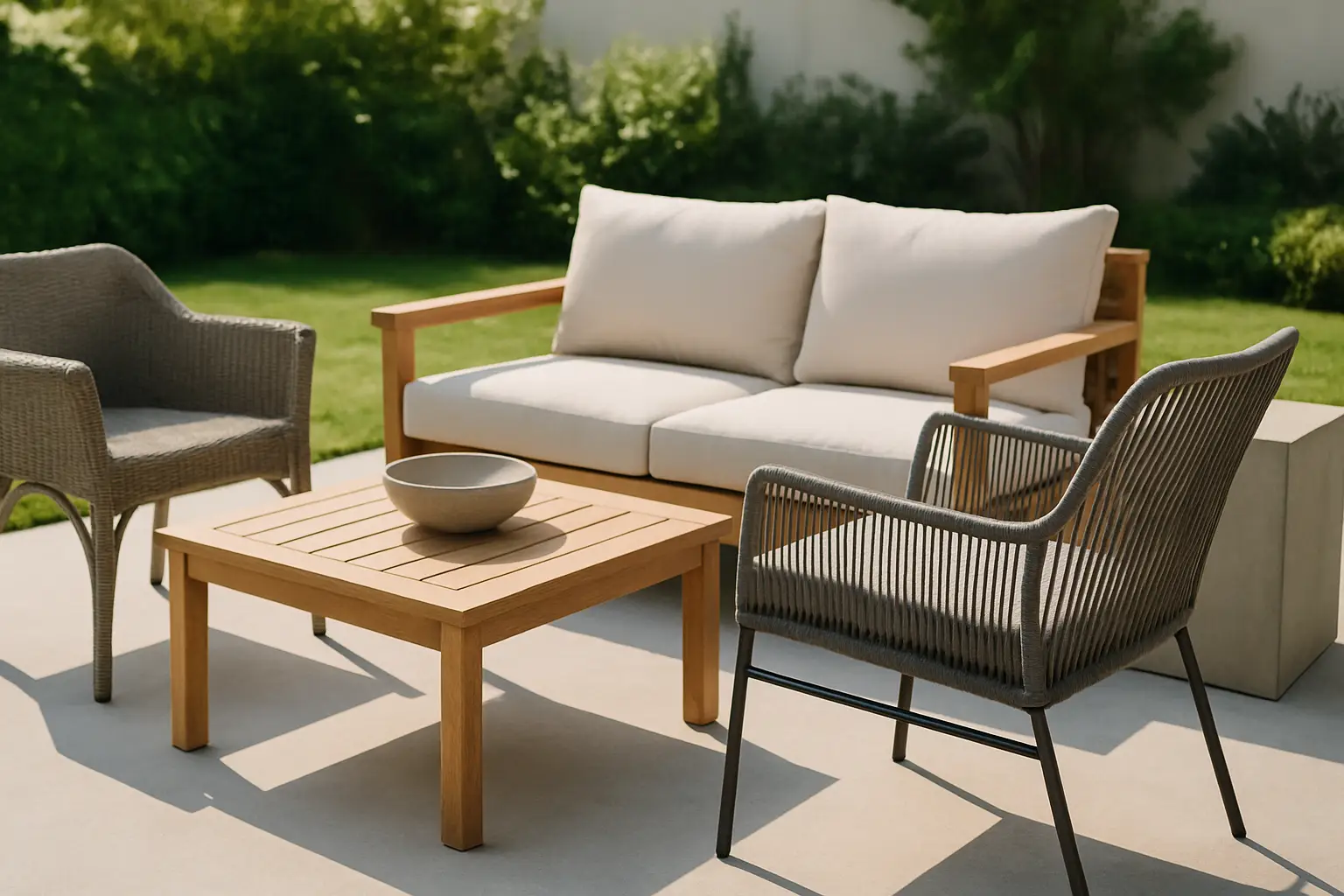
A rooftop lounge looks finished on render day. Six months later, the real test shows up: salt haze on frames, sunscreen film on tabletops, wind-driven grit in joints, and staff cleaning the set three times a day. That is why material selection is not a style preference. It is a performance decision that affects maintenance labor, replacement cycles, and guest experience.
This outdoor furniture material options guide is written for specifiers and buyers who need predictable outcomes across villas, restaurants, pool decks, and hospitality projects. The “best” material is the one that matches your environment, your cleaning reality, and your warranty risk – not the one that photographs well on day one.
Start with the site conditions, not the catalog
If you specify across multiple properties, the fastest way to avoid surprises is to classify each zone before you choose finishes.
Coastal and high-humidity sites punish metals and hardware. Pool decks add chlorine exposure and constant wet-dry cycling. Rooftops bring UV intensity and wind uplift that can turn lightweight pieces into operational problems. F&B terraces add heat, spills, and aggressive cleaning chemicals.
Once the site is classified, you can select frames, surfaces, and upholstery as a system. A great frame paired with the wrong tabletop or cushion fabric still fails the project.
Outdoor furniture material options guide for frames
Frames take the structural load and absorb most of the environmental stress. Your primary decision is how you want to manage corrosion, weight, and long-term finish stability.
Powder-coated aluminum
For most contract environments, aluminum is the default for a reason. It is lightweight for operational flexibility, it does not rust like ferrous metals, and it can be engineered into clean modern profiles.
The trade-off is finish dependency. Aluminum performs as well as its pretreatment and coating process. In high-traffic hospitality, the coating has to resist abrasion from stacking, moving, and daily cleaning. If the coating is compromised, corrosion is less dramatic than steel, but you will still see edge wear and cosmetic breakdown.
Where aluminum wins: rooftops that need manageable weight, poolside layouts that staff reconfigure daily, and multi-site rollouts where consistency matters.
Stainless steel
Stainless is chosen when you want a premium look, heavier stability, and high structural rigidity. It can be an excellent choice for upscale dining and statement lounge pieces.
But “stainless” is not one thing. Grade selection and fabrication details decide whether it stays clean-looking near the ocean. Coastal exposure can still cause tea staining and surface spotting, especially with frequent salt mist and irregular cleaning.
Where stainless wins: sheltered terraces, high-end dining where weight and polish matter, and projects with a defined maintenance plan.
Galvanized steel and e-coated steel
Steel offers strength and cost efficiency, which can be attractive for large quantities. With galvanizing plus a high-quality powder coat, steel can perform well in many outdoor environments.
The trade-off is that once a coating breach happens, steel corrosion can progress quickly at edges, welds, and fasteners. If your site has frequent stacking, dragging, or impacts from service carts, you should assume the coating will be challenged.
Where steel wins: covered outdoor zones, seasonal venues, and projects where weight is a feature and the environment is controlled.
Solid teak and other hardwoods
Hardwoods bring warmth that metals cannot replicate. Teak in particular is naturally oily and well suited for outdoor use. It performs with minimal structural concerns and develops a silver patina that many clients like.
The reality check is appearance control. If the design intent requires a consistent color tone, you are committing to maintenance. If you accept natural weathering, teak becomes a strong low-stress choice. You also need to account for staining risk in F&B environments and the extra care around pool chemicals.
Where teak wins: luxury residential terraces, resort settings where natural materials align with the brand, and lounge zones that prioritize tactile comfort.
Synthetic rattan (PE wicker) over metal frames
Wicker looks relaxed and residential, but for contract projects it is really a composite system: an aluminum frame plus woven resin.
The performance depends on weave density, UV stabilizers, and how the ends are finished. Low-quality weave can become brittle, fade, or loosen under heat and UV. High-quality PE rattan can be a smart choice for hospitality lounge seating when you want texture without the maintenance burden of natural fibers.
Where wicker wins: covered lounges, shaded pool cabanas, and spaces where you want visual softness with controlled upkeep.
Surface materials for dining and occasional tables
Tabletops fail in predictable ways: warping, staining, cracking, or looking permanently dull after cleaning. Matching the surface to cleaning chemicals and heat exposure matters as much as matching the look.
Sintered stone and porcelain-like surfaces
These surfaces perform exceptionally well against UV, staining, and heat. For restaurants and hotels, that translates to fewer permanent marks from food, drinks, and sanitizing cycles.
The trade-off is impact behavior and edge vulnerability. A heavy object dropped on a corner can chip it, and repairs are not always invisible. It also adds weight, which can be positive for wind stability but affects handling and freight.
Tempered glass
Glass is easy to wipe down and can be cost-effective for large orders. It works best in calmer environments with controlled use.
The trade-offs are glare, fingerprints, and the fact that glass can look “tired” fast in high-touch hospitality. If wind is a factor, you also need to think through how the table is weighted and whether umbrellas are integrated.
High-pressure laminate (HPL) and compact laminate
Laminate surfaces can be a strong operational choice because they resist staining, tolerate frequent cleaning, and come in consistent colors and patterns. For multi-property standards, consistency is a real advantage.
The trade-off is heat and edge detailing. Spec the right thickness and edge construction for commercial use, and avoid placing hot items directly on the surface unless it is rated for it.
Solid wood tops
Wood tops deliver character, but they require commitment. In hospitality dining, they can pick up dents, darken in wet areas, and show ring marks unless they are well protected.
If you want wood, specify a finish that matches the cleaning protocol and accept that refinishing may be part of the lifecycle plan.
Upholstery, sling, and rope: comfort vs control
Soft components are where projects often lose consistency. Sun, heat, and cleaning products attack textiles faster than most teams expect.
Quick-dry foam and outdoor fabrics
For poolside and resort seating, quick-dry construction is the difference between a cushion that recovers overnight and one that smells like humidity by week two. Pair quick-dry foam with solution-dyed acrylic or comparable performance fabrics to protect color and reduce fading.
The trade-off is cost and lead-time coordination. Performance textiles cost more upfront, but they reduce replacement frequency, which is often the larger line item across a property portfolio.
Sling seating (mesh)
Sling is a workhorse for pool decks and high-turn environments. It drains quickly, cleans easily, and removes the operational headache of storing cushions.
The trade-off is feel and perceived luxury. Some projects solve this by using sling for secondary seating and reserving cushions for VIP zones.
Rope and woven strap systems
Rope has become a design signature for modern outdoor collections. It adds depth and comfort without heavy upholstery.
The trade-off is cleaning and long-term tension. In dusty climates, rope can hold fine particles. In high UV, low-quality rope can fade or become fuzzy. If you specify rope, align expectations with housekeeping and choose constructions designed for outdoor exposure.
Matching materials to common project zones
Most large outdoor programs include the same four categories: lounge seating, dining, poolside, and shade. The best results come from setting material rules per zone and keeping exceptions intentional.
For poolside, prioritize aluminum frames, sling or quick-dry cushions, and tabletops that resist sunscreen and chlorine exposure. For rooftop lounges, weight and wind stability matter, so heavier bases, secure joinery, and durable coatings rise to the top. For restaurant terraces, focus on stain resistance, heat tolerance, and surfaces that can survive sanitizing routines without clouding or discoloration.
If you are planning a full-property rollout, standardize core finishes and then vary textures through rope, upholstery color, and accessory choices. That approach protects lead times and reduces the procurement friction that comes from too many one-off SKUs.
Specification details that separate “outdoor rated” from contract-grade
Two products can share the same material label and perform very differently. Small construction choices decide whether a project stays tight after a season of real use.
Pay attention to drainage paths in frames, not just the frame material. Water trapped inside tubing creates avoidable corrosion pressure. Confirm hardware choices, especially in coastal sites. Verify how table bases are weighted and how glides perform on your actual flooring.
And be realistic about cleaning. If the site will use strong chemicals daily, choose coatings and fabrics designed for that routine. If the staff will rinse with water and wipe, design for that reality instead.
How PNZ Space supports material-driven projects
When you are balancing aesthetics, durability, and delivery across multiple outdoor zones, material flexibility is only useful if it is supported by manufacturing control and clear approvals. PNZ Space Global supports contract outdoor programs with a broad outdoor catalog, customizable finishes, and in-house project services like 3D drawings and mock-up approvals, helping teams align on materials before production begins. Learn more at https://www.pnzdesign.com.
The decision that protects the whole project
Pick materials the way you plan logistics: assume the environment will be harsher than the render, assume cleaning will be inconsistent, and assume the furniture will be moved more than anyone predicts. When you specify for those realities, your outdoor spaces keep their design intent longer – and your team spends less time chasing fixes after opening day.
