
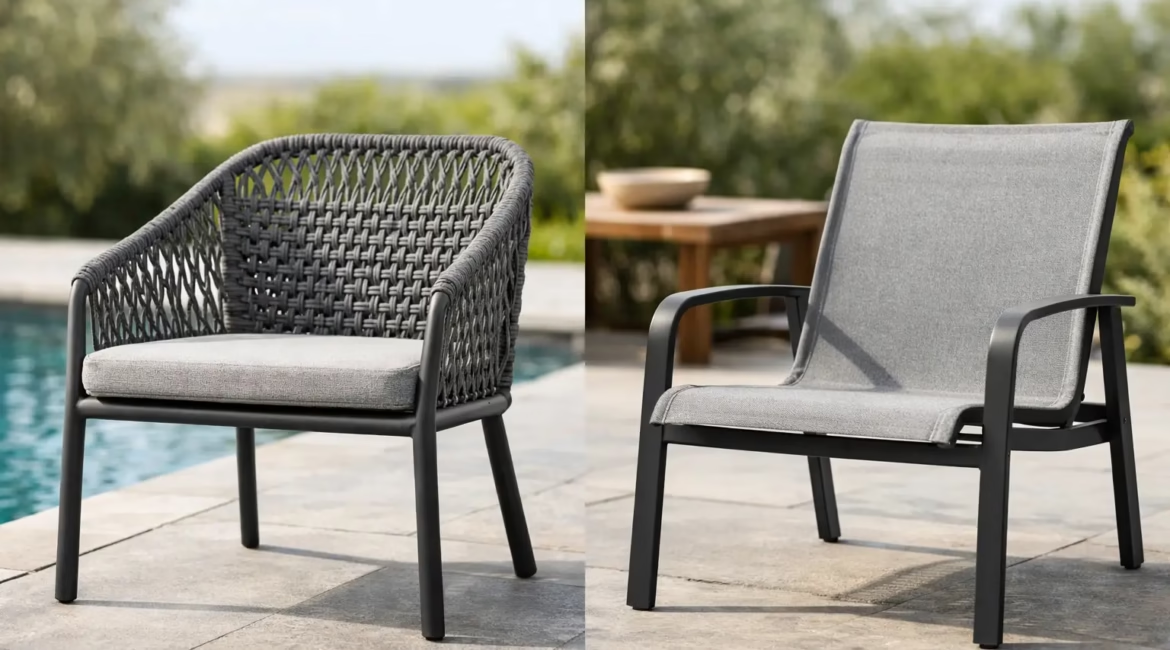
Specifying outdoor seating gets expensive when the material choice looks right on a mood board but underperforms on site. That is exactly why the rope weave vs sling outdoor chairs decision deserves more than a style-based answer.
For procurement teams, designers, and hospitality operators, this is a performance question first. Chair type affects cleaning time, guest comfort, drying speed, replacement cycles, and how well a scheme holds up across dozens or hundreds of seats. The better choice depends on where the chairs will live, how often they will be used, and how much maintenance your team can realistically support.
Rope weave vs sling outdoor chairs: the real difference
At a glance, both options solve the same problem. They provide lightweight, contemporary outdoor seating with fewer bulky cushions and a cleaner profile than fully upholstered alternatives. But they achieve that result in very different ways.
Rope weave chairs use cords or braided outdoor-grade rope stretched or woven over a metal or wood frame. The visual effect is warmer, more textured, and more residential in feel, though many contract collections now use rope successfully in hospitality and commercial settings. Sling chairs use tensioned mesh or fabric panels, usually supported by an aluminum frame, to create a taut, minimal seat and back. The look is leaner and more technical, often with a stronger poolside and resort association.
In practice, rope tends to lead with design character, while sling tends to lead with operational efficiency. Neither is universally better. The project context decides the winner.
Where rope weave chairs perform best
Rope weave works especially well in settings where the furniture needs to soften hard architectural lines. Rooftop lounges, villa terraces, upscale restaurant patios, and hospitality waiting areas often benefit from the added texture. Rope creates depth without relying on heavy cushions, which helps spaces feel layered and premium.
There is also more visual flexibility in rope. Designers can specify different weave patterns, rope diameters, and frame finishes to shift the look from coastal to urban contemporary. That matters for branded environments where seating needs to support a clear design language rather than simply fill a floor plan.
Comfort is another advantage when the chair is properly engineered. Rope has a little give, so it can feel more forgiving than a very tight sling. In dining and lounge applications where guests may sit for extended periods, that softer hand can improve the experience.
The trade-off is maintenance and consistency. Rope chairs have more surface detail, more gaps, and more places for dust and debris to settle. In sandy or high-wind environments, that cleaning burden becomes real. Over time, lower-grade rope can also fray, sag, or fade unevenly if the material specification is weak.
For contract use, rope chairs need to be chosen carefully. UV stability, water resistance, frame coating quality, and weave tension all matter. A rope chair can look exceptional in a hospitality concept, but only if the product was built for heavy use rather than occasional residential placement.
Best-fit projects for rope weave
Rope weave is often the stronger option for dining terraces, outdoor lounges, café seating, and design-led residential developments where appearance carries as much weight as straightforward maintenance. It is also effective in covered outdoor areas where direct exposure is reduced and the furniture can retain its finish longer.
Where sling chairs perform best
Sling chairs are often the easier answer for high-traffic outdoor projects. They are practical, quick-drying, and visually clean. Around pools, beach clubs, hotel balconies, and casual dining areas, sling is frequently specified because operations teams know what they are getting.
The strongest sling chairs use performance mesh engineered for UV exposure, airflow, and repeated cleaning. That makes them well suited to environments where water, sunscreen, food service, and daily turnover are part of normal use. A sling surface does not trap moisture the way cushions can, and it usually dries faster than rope after rain or pool splash.
That ease of care has direct labor implications. Fewer crevices mean faster wipe-downs. Faster drying means quicker return to service. If a property runs lean staffing or has a large outdoor footprint, those savings add up over time.
Sling also performs well when weight and stackability matter. Many sling dining and pool chairs are easier to move, store, and reset than more decorative woven options. For event spaces, seasonal operations, or multi-use commercial layouts, that operational flexibility is valuable.
The limitation is feel and finish. Sling can read more utilitarian if the frame design is basic or the mesh quality is poor. Some sling seats also feel too firm for long dining sessions, especially if tension is high and ergonomics are not well resolved. In premium environments, the wrong sling chair can look efficient but not elevated.
Best-fit projects for sling
Sling usually makes the most sense for pool decks, beachfront hospitality, casual F&B terraces, and large residential or commercial developments where maintenance speed, weather performance, and replacement efficiency are top priorities.
Durability depends on more than the visible material
Buyers often compare rope and sling as if the seat surface alone determines lifespan. It does not. Frame construction, weld quality, powder coating, hardware specification, and assembly tolerances matter just as much.
A contract-grade rope chair with a fully welded aluminum frame and engineered outdoor rope can outlast a poorly built sling chair. The reverse is also true. If the sling fabric is commercial grade and the frame system is designed for repeated tension loads, sling can deliver excellent longevity in punishing environments.
This is where vertically integrated manufacturing and specification control become important. For large projects, consistency across units matters as much as raw material performance. If one batch of rope is slightly off in color or one sling panel loses tension faster than the rest, the installation starts to look tired before the project should.
For architects and procurement teams, the right question is not simply rope or sling. It is whether the exact product has been engineered for the traffic level, climate exposure, and cleaning protocol of the site.
Comfort, climate, and user experience
Comfort is often treated as subjective, but outdoor seating comfort usually follows a few predictable patterns.
Rope weave tends to feel more tactile and relaxed. In lounge settings, that can be a plus. It looks inviting and often delivers a softer sit. In hotter climates, though, the weave pattern matters. Some rope designs ventilate well, while denser constructions can hold heat more than expected.
Sling chairs usually excel in breathability. Air moves through the mesh, which can make them more comfortable in direct sun and humid conditions. That is one reason they remain a staple around pools and in warm-weather hospitality environments. The seat may feel firmer, but it often feels cooler.
For guest-facing spaces, comfort should also be matched to dwell time. If guests are expected to sit for a quick coffee or pool break, sling may be ideal. If the setting is a long dinner service or a lounge area intended for extended use, rope can offer a more relaxed experience if the chair geometry is right.
Which is better for hospitality and large-scale procurement?
For scale projects, the rope weave vs sling outdoor chairs decision usually comes down to labor, visual intent, and replacement planning.
If the brief calls for a refined, design-forward environment with strong texture and a residential-luxury feel, rope often supports the concept better. It helps differentiate a space and can elevate terraces, club lounges, and branded dining settings.
If the brief is centered on fast turnover, weather exposure, and operational simplicity, sling is often the smarter procurement choice. It reduces maintenance friction and tends to perform predictably in poolside and casual hospitality applications.
Many projects benefit from using both. Rope can define key guest-facing zones such as lounge seating and signature dining areas, while sling handles pool decks, secondary balconies, and high-volume casual seating. That mixed approach protects the design vision without forcing one material to solve every use case.
For buyers managing timelines, approvals, and multi-site rollouts, product support matters as much as material selection. Access to swatches, mock-up approvals, finish options, and 3D drawings shortens the decision cycle and reduces specification risk. That is especially true when outdoor collections need to coordinate across lounge, dining, and pool categories.
How to choose with fewer mistakes
Start with the environment, not the style board. If chairs will sit near chlorinated water, get cleaned daily, and turn over constantly, favor the material system that minimizes labor and downtime. If the space is design-led, partially covered, and built around longer guest stays, prioritize comfort and visual richness.
Then evaluate the product at three levels: material grade, frame quality, and service support. Ask how the rope or sling performs under UV exposure, how replacement parts or matching units are handled, and whether the supplier can maintain consistency at volume. For commercial projects, those answers matter more than a showroom first impression.
A dependable supplier should be able to guide that process with practical clarity, not guesswork. At PNZ Space, that means supporting buyers with design consultation, material flexibility, mock-up approvals, and manufacturing control that aligns the final product with the realities of project delivery.
The best outdoor chair is not the one that wins the first look. It is the one that still looks right, performs well, and stays easy to manage after a full season of real use.
