
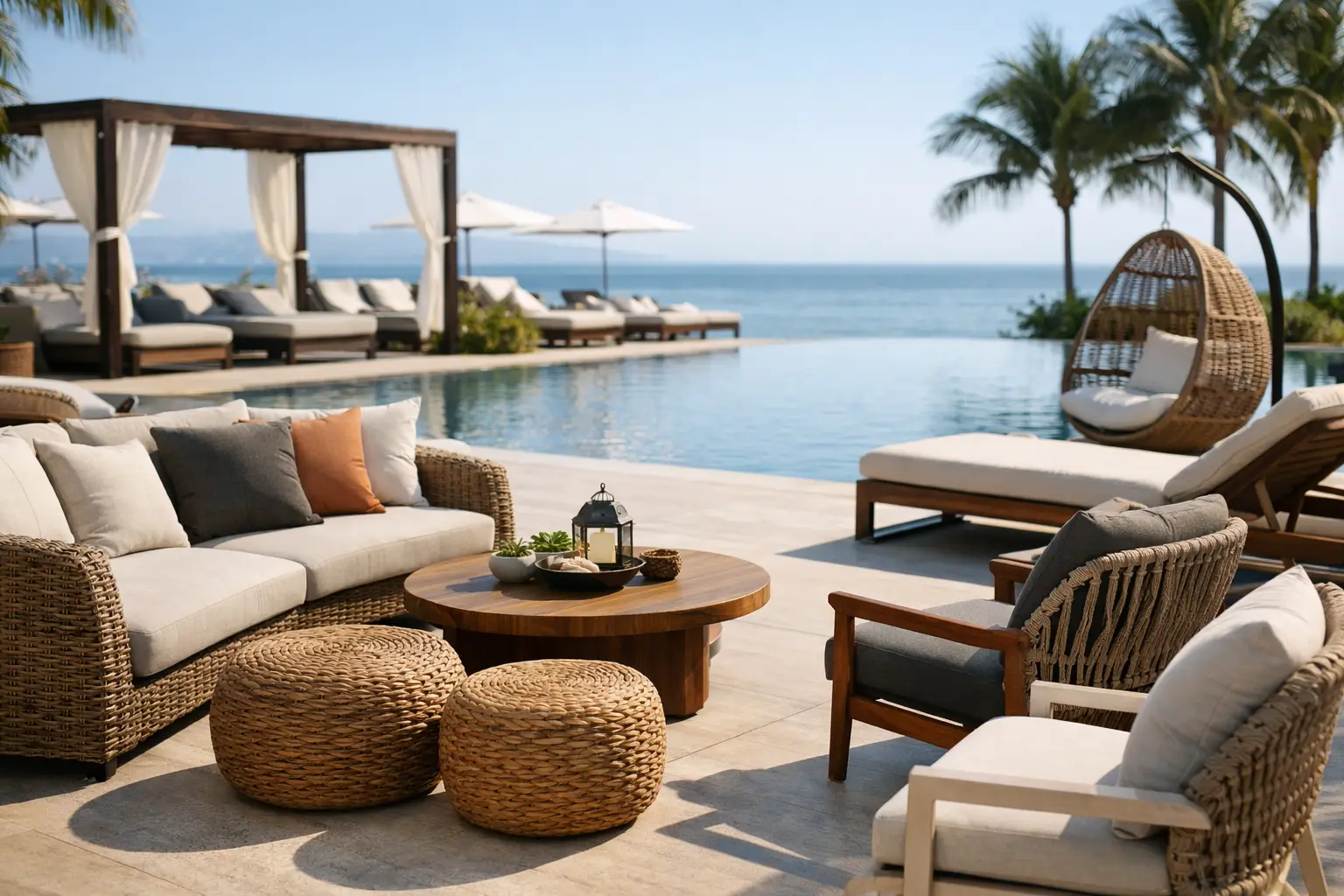
A resort terrace can look exceptional in a rendering and still fail by the second weekend of peak season. The reason is usually not style. It is layout rigidity, poor traffic flow, or seating that cannot adapt when guest behavior shifts from breakfast service to sunset cocktails to private events. That is exactly why modular seating has moved from a design preference to an operational standard in hospitality.
For developers, operators, architects, and procurement teams, the most relevant modular outdoor seating trends for resorts are not about novelty for its own sake. They are about flexibility, maintenance control, faster specification, and better use of high-value outdoor square footage. A modular collection has to perform under heat, moisture, UV exposure, and heavy turnover while still delivering a refined guest experience.
Why modular outdoor seating trends for resorts matter now
Resorts are asking more from every outdoor zone. Pool decks are becoming all-day social spaces. Rooftops need to support both casual lounging and revenue-generating events. Beach clubs, restaurant terraces, and villa patios are expected to carry a clear design identity while serving different guest groups throughout the day.
Fixed seating plans limit that potential. Modular systems give operators the ability to reconfigure spaces without replacing the full furniture package. That matters when occupancy patterns change, when F&B concepts evolve, or when a property needs to refresh its layout without starting from zero.
There is also a procurement advantage. When lounge seating, sectional components, tables, daybeds, and accessories are specified as part of a coordinated outdoor program, it becomes easier to manage finish consistency, approvals, replacement planning, and phased delivery. For large hospitality projects, that level of control is not a detail. It is part of keeping timelines and budgets intact.
The biggest shift: flexibility is now a design requirement
The strongest trend is simple: modularity is being specified earlier in the design process, not added later as a convenience. Design teams want systems that can scale across multiple zones while still responding to each area’s function.
A poolside setup might use the same collection differently than a rooftop lounge. In one area, armless units and ottomans can support a looser social layout. In another, corner modules and integrated tables can create more defined conversation settings. The benefit is visual continuity without forcing every outdoor space to behave the same way.
That approach also supports phased development. Resorts opening in stages or renovating zone by zone often need products that can be deployed now and expanded later. Modular lines solve that problem better than one-piece furniture programs because they preserve the option to add, swap, or reposition components as operations mature.
Low-profile lounge forms are replacing bulky silhouettes
In resort settings, guests tend to read outdoor furniture instantly. Heavy, oversized seating can make a terrace feel dated or crowded, even when the cushion comfort is good. Current demand is moving toward lower-profile modular forms with cleaner lines, slimmer frames, and more open visual spacing.
This does not mean less comfort. It means comfort is being achieved through proportion, seat depth, and cushion engineering rather than visual bulk. The result is a more contemporary look that works across luxury hospitality, branded residences, and upscale mixed-use developments.
There is a practical gain here too. Cleaner profiles often improve sightlines around pools, gardens, and water features. That is useful in projects where the landscape architecture is a major selling point and furniture should support the setting rather than compete with it.
Mixed-material construction is becoming the standard
One of the clearest modular outdoor seating trends for resorts is the use of mixed materials to balance aesthetics with performance. Teak-look finishes, powder-coated aluminum, all-weather rope, synthetic wicker, and engineered upholstery are being combined more intentionally than before.
For specifiers, this creates more control over the character of a space. A coastal resort may lean into light frames and textured weaving for a relaxed feel. An urban hospitality project may prefer darker metal profiles with tailored cushions for a more architectural expression. In both cases, modularity works best when the material story remains coherent across lounge, dining, and pool categories.
The trade-off is that mixed-material collections require disciplined quality control. Connections, finish matching, and weathering behavior matter more when several materials meet in one system. That is where manufacturing oversight and mock-up approvals become especially valuable. A beautiful sample is not enough if the full project cannot maintain consistency at volume.
Built-in tables and hybrid modules are gaining ground
Resort operators increasingly want seating that does more than seat. Hybrid modules with integrated side tables, corner ledges, and adaptable ottomans are being specified because they reduce clutter and improve usability.
This is particularly effective in high-traffic hospitality environments. Built-in surfaces give guests a place for drinks, phones, and small plates without requiring as many loose tables to be moved, misplaced, or damaged during daily operations. It also helps service teams maintain cleaner layouts.
That said, there is an operational balance to consider. Too many integrated elements can make a layout less flexible for events. The right specification depends on the zone. In a fixed rooftop lounge concept, integrated tables may improve both appearance and function. In a multi-use event terrace, more movable companion pieces may be the better choice.
Neutral palettes still lead, but texture is doing more work
Resorts are still favoring neutrals for large seating programs because they age better visually, simplify replacement planning, and work across changing seasonal styling. Sands, charcoals, soft grays, warm taupes, and off-whites remain strong choices.
What has changed is how designers are adding depth. Instead of relying on strong color blocking in the main seating frame, they are using tactile contrast – woven details, varied upholstery textures, and layered accent pieces. This keeps the base collection versatile while allowing the property to update its look through accessories and soft goods.
For procurement teams, that strategy is efficient. Core seating can stay consistent across multiple sites or phases, while accent elements provide localized identity. It reduces risk in large orders and makes future replenishment easier.
Layouts are being designed around zoning, not just capacity
Older outdoor plans often focused on how many seats could fit. Current resort projects are more likely to prioritize how seating defines behavior within the space. Modular systems are central to that shift because they can create soft boundaries without built construction.
A sectional arrangement can separate a quiet lounge zone from a family-oriented pool area. Back-to-back modules can create circulation logic on a large deck. Curved or angled combinations can support more social interaction in bar-adjacent settings. In each case, the furniture is doing spatial work.
This matters for revenue as much as aesthetics. Better zoning can increase dwell time, improve service flow, and make premium outdoor areas feel more intentional. When a guest senses that a space has been planned for comfort and ease, the experience improves before any service interaction begins.
Durability is being specified more aggressively
Design ambition is still high, but resort buyers are scrutinizing durability with more discipline. Modular seating must withstand not just weather, but frequent reconfiguration, cleaning protocols, and high guest turnover. That means frame strength, joinery, cushion retention, and finish resilience are under closer review.
In practical terms, contract-grade performance is becoming a threshold requirement, not a premium upgrade. Buyers want confidence that units will align properly after repeated movement, that upholstery will hold its shape, and that replacement components can be ordered without disrupting the full installation.
This is where vertically integrated suppliers have a clear advantage. When design, manufacturing, mock-up review, and fulfillment sit inside one coordinated process, it becomes easier to control specification accuracy and delivery schedules. For hospitality projects with complex timelines, that operational structure can reduce risk significantly.
Customization is expected, but only when it stays manageable
Resort projects rarely want fully off-the-shelf solutions. Developers and designers often need custom dimensions, finish options, upholstery selections, or module combinations that fit a specific plan. Customization remains a major trend, but the market is moving toward controlled flexibility rather than endless variation.
That is a healthy shift. Too much customization can slow approvals, complicate replacements, and introduce inconsistency across a property. The better approach is to work from a strong modular base collection and tailor the visible details – materials, colors, and select dimensions – where they add the most value.
For large-scale buyers, this is where a supplier’s design support becomes part of the product offer. 3D drawings, material swatches, and mock-up approvals help teams make faster decisions with fewer surprises later.
What buyers should ask before specifying modular seating
A modular collection may look right on paper and still create issues during deployment. Before final approval, specifiers should evaluate how quickly the layout can be reconfigured, whether replacement components are available, how the materials will age in the local climate, and whether the supplier can support volume delivery without quality drift.
It is also worth checking whether the seating program connects cleanly to adjacent categories such as dining, poolside furniture, shade, and accessories. Outdoor spaces perform better when they are specified as a complete environment rather than a series of isolated purchases. That is especially true for resort properties where brand consistency, operational ease, and guest perception all intersect.
At PNZ Space Global, this is why project teams often look beyond the furniture piece itself and assess the full delivery system behind it – design consultation, factory control, approval workflow, and white-glove logistics included.
The best modular outdoor seating does not ask a resort to choose between design impact and operational practicality. It should give both. If a collection cannot handle layout changes, climate exposure, and procurement realities at the same time, it is not a hospitality solution yet. The right one will keep paying off long after installation day.
