
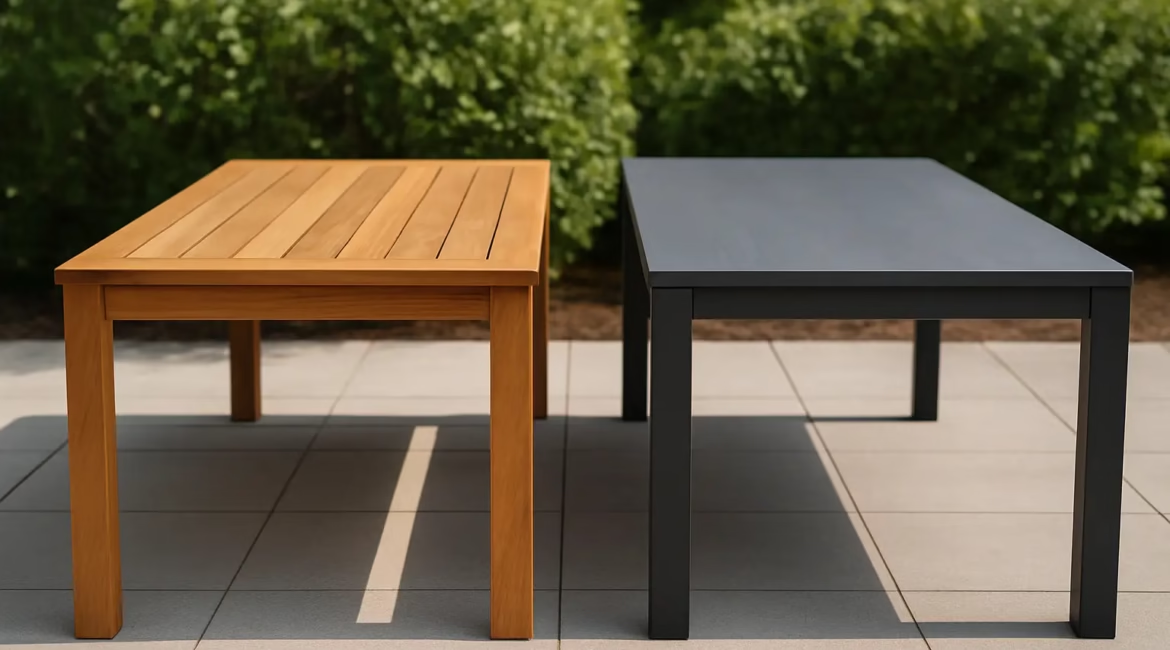
A rooftop restaurant that turns tables all day has a different problem than a private villa terrace. When considering durability and aesthetics, the choice between Teak vs Composite Outdoor Tables becomes important. Both need outdoor dining that looks intentional on day one – and still looks intentional after sun, spills, and staff cleaning routines.
That is why the teak vs composite outdoor tables decision is less about taste and more about operating conditions: exposure, maintenance capacity, guest behavior, and replacement cycles. If you are specifying for hospitality, mixed-use, or multi-site residential, the right choice is the one that stays on spec with the fewest surprises.
Teak vs composite outdoor tables: what you are really buying
Teak is a natural hardwood with high oil content and tight grain. In practice, that means it resists moisture intrusion better than most woods and holds up well in heat. It also means the surface evolves – it will shift color, it can check (fine hairline cracks), and it needs a clear care plan if you want it to stay a consistent tone.
Composite table materials are engineered. Depending on the system, that can mean a polymer-wood blend, a molded resin, or a composite skin over a structural core. The value proposition is predictability: color stability, consistent dimensions, and lower day-to-day upkeep. The trade-off is that composites behave differently under high heat, abrasion, and impact, and the aesthetic is more controlled and less organic.
For procurement teams, the real question is this: do you want a material that ages naturally and can be refinished, or a material that stays closer to its original look with fewer interventions?
Performance in real environments
Sun and heat exposure
Teak handles sun well structurally. What changes is appearance. UV will push teak toward a silvery patina unless it is regularly oiled or sealed. On shaded terraces, that patina can look premium and intentional. On high-visibility dining decks where brand standards require uniform tone, the color shift can read as inconsistency unless maintenance is built into operations.
Composite tops generally hold color more consistently, but they can store heat depending on color and formulation. Dark composite surfaces can become uncomfortable to the touch in peak sun, which matters for poolside snack tables and family-oriented venues. If you are specifying dark finishes for a desert climate, request performance data and confirm with a physical sample left in sun.
Water, humidity, and wet cleaning
Teak is naturally moisture-resistant, but it is not waterproof. Standing water and constant wet mopping can accelerate staining and promote surface roughness over time. In hospitality, the bigger issue is chemical exposure – aggressive cleaners can strip oils and shift color.
Composite tables are typically less sensitive to routine wet cleaning and are less likely to stain from common beverages. That said, some composites can show surface haze from repeated chemical use, and textured finishes can trap grime if not brushed properly. Specify cleaning protocols early, and align material choice with the actual staff routine, not the ideal one.
Stains, scratches, and impact
Teak tends to hide minor scratches because the material has depth and can be sanded and refinished. For venues that accept natural character, teak is forgiving. For high-contrast design schemes, even small stains can stand out.
Composite surfaces vary widely. Some are highly scratch-resistant; others will show abrasion from plates, sand, or gritty cleaning pads. The risk with certain composites is that when the surface is damaged, refinishing is not straightforward – you may be looking at panel replacement rather than repair.
If the site is near the beach or a construction zone where grit is unavoidable, ask for abrasion testing information and choose an edge detail that resists chipping.
Maintenance: who is actually doing the work?
This is where many outdoor table specs fail: the material is selected for a look, not for the maintenance reality.
Teak can be low-maintenance if you accept patina. If you want warm, golden teak year-round, it becomes a program: periodic cleaning, controlled sanding as needed, and oiling or sealing on a schedule that matches exposure. On a resort with a dedicated facilities team, that can be manageable. On a restaurant with turnover in staff and inconsistent routines, it often is not.
Composite is typically the safer choice when you need appearance consistency with minimal labor. It still requires cleaning, but it does not demand refinishing to remain presentable. For multi-site rollouts, that operational simplicity is a real cost reducer.
A practical way to decide is to write the maintenance plan first. If you cannot confidently assign ownership, frequency, and approved products, do not spec a material that requires disciplined upkeep.
Aesthetics and brand standards
Teak communicates warmth and authenticity. It pairs well with neutral upholstery, stone, and architectural lighting, and it fits premium residential and resort narratives. The natural variation can elevate a space – or complicate it.
Composite is better when you need controlled repetition: identical tone across dozens of tables, predictable grain patterns, and reduced variation between batches. For branded hospitality groups, that repeatability supports consistency across locations and simplifies replacement ordering.
The decision also touches other categories. If your project includes lounge, poolside, and dining, specifying a material system that can carry across multiple product types can reduce visual clutter and streamline procurement.
Cost, lifecycle, and replacement math
Upfront pricing often favors composite, while teak can justify its cost through longevity and repairability. But the math changes based on how the venue operates.
Teak tends to win when:
- The project can tolerate patina or has a defined refinishing plan.
- The tables are expected to remain in service for many years.
- You want a surface that can be restored instead of replaced.
Composite tends to win when:
- You need consistent appearance with minimal ongoing labor.
- You are outfitting high-volume dining where spills and cleaning are constant.
- You expect layout changes and want easier, faster replacements.
For procurement teams, the most useful metric is not price per table – it is cost per seat-year, including labor. Teak with inconsistent maintenance can become expensive in the wrong way: it still lasts, but it no longer meets brand presentation standards.
Specification details that drive outcomes
Substructure and hardware
Table performance is not only the top material. In coastal or high-humidity environments, specify corrosion-resistant hardware and confirm the base material and finish. A teak top on a low-grade base is a weak system. The same is true for composite: a stable top still fails if the frame flexes or fasteners corrode.
Movement and tolerances
Wood moves with humidity. Teak is stable for a wood, but it still moves. Your design should allow for seasonal expansion and contraction, especially on larger tops. A common failure mode is over-restrained joinery that leads to cracking or warping.
Composite systems have different movement characteristics – some expand noticeably with heat. That matters for long communal tables, tight clearances, and fixed pedestal designs. Ask how the manufacturer handles expansion at the attachment points.
Fire and code considerations
Certain hospitality environments have requirements around fire performance, especially in enclosed or semi-enclosed outdoor areas. Teak and composite will have different behaviors and testing paths. If your project is code-sensitive, bring compliance into the conversation early rather than after design approval.
Climate scenarios: quick guidance
If you are specifying in hot, high-UV climates, teak is structurally reliable but will change color fast. Composite can hold color better but may run hotter to the touch in darker finishes. In coastal, salt-heavy environments, both materials can work, but the real differentiator is the frame, hardware, and cleaning chemicals.
In freeze-thaw climates, water management matters. Teak can handle weather, but standing water and ice can roughen surfaces. Some composites become brittle in extreme cold, depending on formulation. If the site winters outdoors, validate cold-weather performance and storage recommendations.
Procurement realities: lead times, spares, and consistency
For project teams, the best material choice can still fail if you cannot control consistency and replenishment.
Teak has natural variation between boards and batches. That is normal, but it needs to be acknowledged in mock-ups and approvals. If your brand standards require tight visual uniformity, set acceptance criteria up front.
Composite offers more consistent batch-to-batch appearance, which helps with phased installations and replacements. It also simplifies spare parts planning if the system is modular.
Either way, insist on a pre-production sample or mock-up for approval, and align that approval with what will be delivered at scale. For multi-site projects, lock finishes and materials early and keep a documented spec sheet for reorder accuracy.
Choosing between teak and composite with confidence
If your project is a statement terrace where guests linger and the material story matters, teak can earn its place – especially when the patina is treated as a design feature, not a defect. If your project is a high-traffic dining operation where presentation must stay consistent through constant cleaning, composite is often the operationally smarter spec.
The most dependable outcome comes from matching the material to the service model. When you choose based on how the space is used, how it is cleaned, and how replacements are handled, the table stops being a risk item and becomes a predictable part of your FF&E plan.
If you want to pressure-test your spec before you commit, PNZ Space Global supports project teams with material swatches, mock-up approvals, and in-house design assistance for outdoor dining packages at scale through https://www.pnzdesign.com.
Make the choice that your operations team will thank you for six months after opening – not the one that only looks perfect on install day.
