
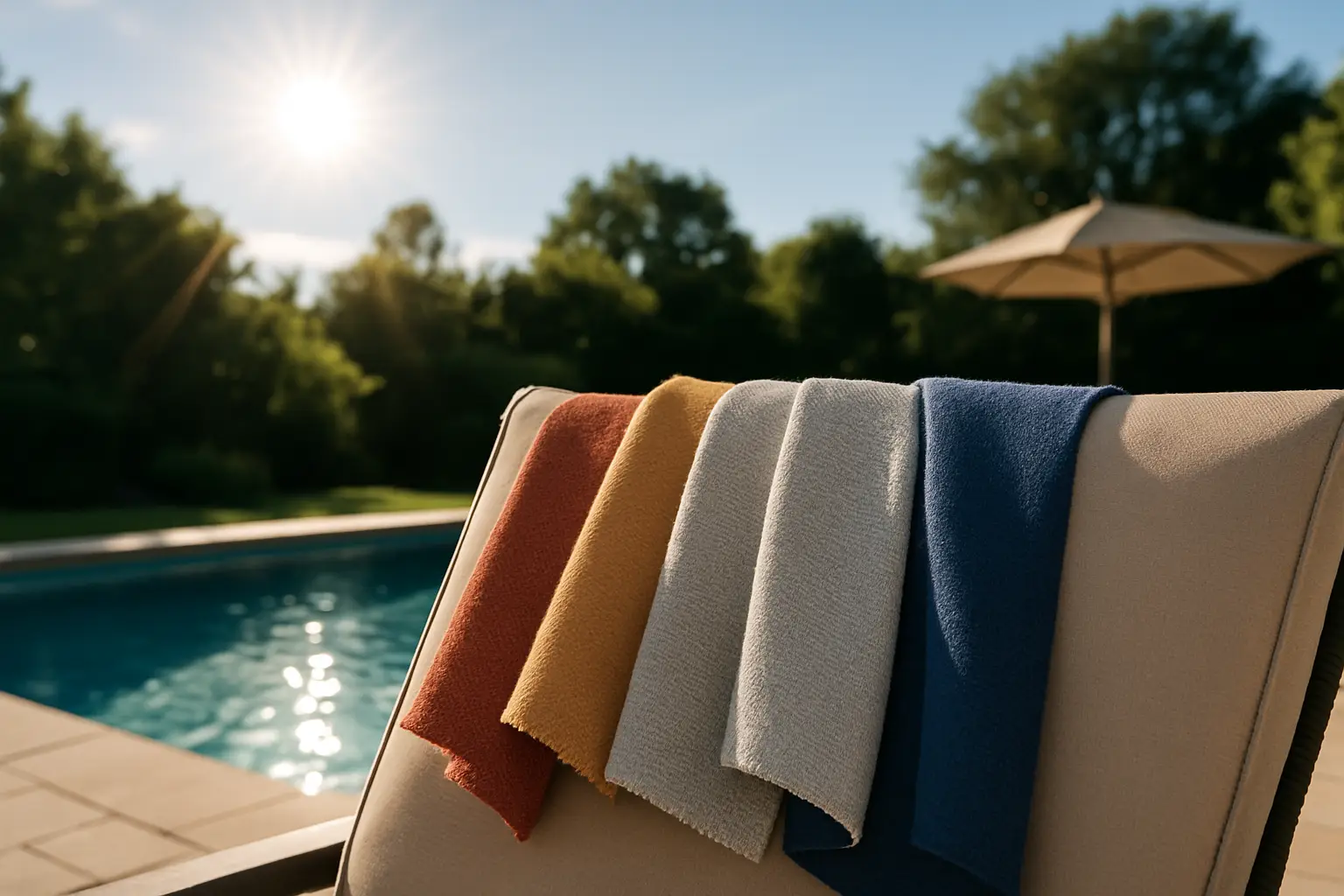
Pool decks look unforgiving on day one because they are. UV bakes color out of fabric, chlorine dries out finishes, and sunscreen turns into a permanent stain test. If you are specifying outdoor seating for a hotel, rooftop lounge, or villa pool, the question is not whether textiles will be stressed. It is whether the fabric system you choose was built for that abuse. For the toughest conditions, you’ll want sun and chlorine-proof fabrics that last outdoors.
What fabrics resist sun and chlorine in real projects?
When buyers ask what fabrics resist sun and chlorine, they usually mean three performance outcomes: the color holds, the hand stays pleasant (not brittle or sticky), and the fabric does not fail at seams or high-wear points. The most reliable answers are fiber-driven, then reinforced by construction and finishing.
Solution-dyed acrylic and solution-dyed olefin are the two workhorses for high-UV outdoor cushions and pillows. For poolside environments specifically, PVC-coated polyester mesh and vinyl (or other coated synthetics) often outperform woven upholstery when you need fast drainage and wipe-clean surfaces. Each category has trade-offs, which is where smart specification matters.
Solution-dyed acrylic (premium color stability)
Solution-dyed acrylic earns its reputation because pigment is added before the fiber is formed. That means the color is part of the polymer, not a surface treatment that can wash out. In strong sun, this is one of the most dependable ways to manage fading over years rather than months.
Around chlorinated pools, acrylic performs well in terms of color retention and general durability, but it is not “chlorine-proof” in a literal sense. Continuous exposure to splash-out, wet storage, and chemical residue can still accelerate wear, especially if cushions stay damp. Acrylic does best when paired with quick-dry foam, breathable constructions, and a maintenance plan that includes rinsing and proper drying.
Solution-dyed olefin (value-forward and highly UV resistant)
Olefin (polypropylene) is also frequently solution-dyed and is a strong choice when you need reliable UV resistance at a competitive cost. It tends to have excellent resistance to moisture and mildew and is widely used in hospitality outdoor seating because it balances performance with procurement realities.
In chlorine environments, olefin is generally resilient, but the feel and drape can be slightly more utilitarian than premium acrylic upholstery. It is a strong “spec and scale” option for large projects where you want consistent lots and predictable lead times.
PVC-coated polyester mesh (poolside MVP for sling and stackables)
If your priority is a fabric that shrugs off chlorinated water and dries fast, coated mesh is often the most practical answer. Think sling loungers, stackable dining chairs, and any seat that lives uncovered beside a pool.
The coating creates a surface barrier that resists chemical penetration and makes cleaning straightforward. The polyester scrim provides dimensional stability and strength. The trade-off is comfort and aesthetics: coated mesh reads more “performance” than “residential upholstery,” so it is best used where the furniture silhouette and the use case align.
Vinyl and other coated fabrics (wipe-clean control)
Coated fabrics can deliver excellent resistance to chlorine, body oils, and frequent cleaning, which matters for high-turn hospitality. They also help standardize upkeep across staff shifts because the cleaning method is simple.
The trade-off is heat and breathability. Dark or mid-tone vinyl can feel hot in direct sun, and some coated surfaces can stiffen over time if exposed to extreme heat cycles. This is where color selection, texture choice, and shaded programming make a measurable difference.
Polyester? Only when it is engineered for outdoors
Standard piece-dyed polyester is not the first pick for aggressive UV and chlorine conditions because fading and hydrolysis risks can show up sooner depending on the chemistry and finish. That said, outdoor-grade polyester constructions with strong UV inhibitors and proven test results can be viable for shaded areas or lower-exposure zones.
If a fabric spec reads “polyester,” the next question should be: solution-dyed or piece-dyed, what is the UV rating, and what is the chlorine fastness claim backed by?
The spec sheet details that actually predict performance
Fiber choice gets you 60 percent of the way there. The rest is how the fabric is built, finished, and validated.
UV and fade resistance: ask for measurable ratings
For commercial outdoor projects, you want a supplier who can speak in performance numbers, not marketing phrases. Look for UV resistance or lightfastness results based on recognized test methods. More importantly, ask how those results translate to the environment you are furnishing: full sun pool deck, shaded terrace, or rooftop with reflective glare.
Also consider that stripes and saturated colors show fading more quickly than heathers and textured neutrals. If you need a signature color, plan for it: choose higher-performing fibers, confirm lots, and order extra yardage for future refreshes.
Chlorine resistance is about contact time and cleaning behavior
Chlorine exposure is rarely a single event. It is repeated splash-out, wet towels on cushions, and chemical residue that dries into the textile.
A fabric can be “chlorine resistant” and still look tired if it is not maintained. For procurement teams, the right question is not only whether the fabric tolerates chlorine, but whether it can be cleaned back to baseline without degrading the finish. Coated fabrics generally win here. Wovens can perform well, but they require a disciplined rinse-dry routine.
Construction: tight weaves, stable knits, and seam strategy
High-traffic outdoor seating fails at stress points first. Ask how the textile behaves when stretched, stitched, and exposed to heat cycles. Sling applications need dimensional stability. Cushion covers need abrasion resistance and seam integrity.
Even the best fabric will underperform if the thread, zipper tape, and seam allowances are not specified for outdoor duty. For poolside, UV-stable threads and corrosion-resistant hardware are not optional.
Finishes: water repellency vs. cleanability
Many outdoor upholstery fabrics carry a water-repellent finish. That helps with light rain and spills, but it does not automatically mean better chlorine resistance. In fact, some finishes can attract oils or create uneven wear patterns if cleaned aggressively.
For hospitality, prioritize finishes that support repeatable maintenance: mild soap cleaning, rinse, and air-dry. If your operation uses stronger disinfectants, confirm compatibility before committing to a large run.
Match the fabric to the furniture category, not just the mood board
Design intent matters, but outdoor performance is won or lost by pairing the right textile with the right frame and use case.
Pool loungers and daybeds
These pieces live closest to splash zones and are the most exposed to sunscreen, wet bathing suits, and constant sun. Coated mesh for sling loungers is a high-control option. For cushioned loungers, solution-dyed acrylic or olefin can work well if the cushion build supports drainage and drying.
If your client expects plush comfort, do not compensate with fabric alone. Specify quick-dry foam and breathable liners so chemical-laden moisture does not sit inside the cushion.
Outdoor dining
Dining chairs see abrasion from movement and frequent wipe-downs. If the chairs are slung, coated mesh performs reliably. If they are cushioned, consider textures that hide minor soiling and can be cleaned quickly between seatings.
Sofas and lounge sets
These zones often sit slightly back from the pool edge, which changes the requirement. If the seating is under shade or pergolas, you can prioritize hand feel and design richness while still insisting on solution-dyed fibers and strong UV ratings.
For high-visibility hospitality lounges, plan a maintenance-friendly color story. Lighter solids show sunscreen and airborne dust; very dark solids show salt and water marks. Mid-tone heathers and subtle patterns are easier to keep looking “opened today” across a season.
Procurement realities: how to reduce risk before you place a large order
For contract and hospitality buyers, the biggest cost is rarely the fabric itself. It is change orders, inconsistent lots, and premature replacement.
Start by requesting physical swatches and reviewing them in the actual site lighting. Rooftops and pool decks amplify glare and shift perceived color. Then validate the performance claims with test documentation and warranty language. If a supplier cannot clearly state UV performance, chlorine resistance expectations, and recommended cleaning methods, that uncertainty becomes your operational risk.
A practical approach is to zone the project. Use the highest chemical-resistant materials at the pool edge, then step into softer upholstery as you move into shaded lounge areas. This keeps budgets controlled while still protecting the highest-risk locations.
If you need a partner who can manage this level of specification across lounge, dining, poolside, and shade categories – and keep it consistent through manufacturing and delivery – PNZ International supports B2B outdoor projects with material flexibility, mock-up approvals, and production control at scale.
Cleaning and care that protects your fabric investment
Even the best answer to what fabrics resist sun and chlorine assumes one operational habit: do not let chlorinated water dry repeatedly into the textile.
A simple rinse with fresh water on high-splash pieces, followed by proper drying, extends color and hand feel. For coated fabrics, routine wipe-downs prevent chemical buildup. For woven upholstery, avoid harsh brushes and aggressive bleach solutions unless the fabric is explicitly rated for it, because you can trade a stain removal win for accelerated fading.
The most successful hospitality operators standardize a cleaning method, train staff once, and stick to it. Consistency is what keeps a 200-seat terrace looking uniform, not patchy.
Closing thought: specify fabrics the way you specify frames – based on the exact exposure zone, the cleaning reality, and the replacement cost if you get it wrong. That is how outdoor spaces stay photo-ready long after opening week.
