
On a rooftop lounge it might be sunscreen and bar spills. Poolside it is chlorine mist and wet towels. At a resort it is daily turnover and housekeeping cycles. Outdoor textiles fail in predictable ways – not because the fabric is “bad,” but because cleaning methods, drying time, and storage habits rarely match the environment.
If you manage outdoor furniture at scale, the goal is not “keep it clean.” The goal is to keep the textile performing and presenting consistently across units, seasons, and teams. Below is a field-ready approach to how to maintain outdoor furniture textiles, written for commercial and hospitality realities: fast resets, high traffic, and zero patience for downtime.
Start with the textile spec, not the stain
Outdoor “fabric” can mean solution-dyed acrylic, olefin, polyester blends, PVC-coated mesh (like sling seating), or vinyl. Each reacts differently to chemicals, abrasion, and heat. A cleaning protocol that is safe for olefin can prematurely age a coated mesh, and a solvent that lifts grease can strip a water-repellent finish.
Before you set a property-wide SOP, confirm three things from the supplier: the fiber type, whether there is a factory-applied finish (water repellent, anti-mildew), and whether cushion covers are removable and washable.
Build a maintenance rhythm: daily, weekly, quarterly
Textile care works when it is scheduled like any other operating task. The best-performing properties don’t deep clean constantly – they prevent soil from becoming permanent.
Daily care is about removal, not scrubbing. Dry brush or vacuum cushions and slings to pull off sand, dust, and food particles before they grind into fibers. In pool environments, a quick fresh-water wipe-down reduces chlorine residue that can dull color over time.
Weekly care focuses on light cleaning. A mild soap solution and a soft brush is usually enough to reset appearance without stressing seams. The key is rinse volume. Soap left in the fabric attracts more dirt and can create a gray cast, especially in light neutrals that many designers specify.
Quarterly or seasonal care is where you restore performance. That might mean a full wash of removable covers, a controlled mildew treatment where humidity is high, and reapplication of a fabric protectant if the textile is designed for it. For hospitality groups, this is also the right cadence for spot audits: check zippers, piping, and high-friction edges before they turn into replacements.
How to maintain outdoor furniture textiles without damaging them
Most textile damage comes from good intentions: harsh chemicals, aggressive pressure, or fast heat. A safer standard process is slower at the start and faster over the life of the furniture.
Begin by removing loose soil. Use a handheld vacuum, upholstery tool, or soft brush. Then pre-wet the area with clean water. Pre-wetting reduces the chance that soap drives stains deeper.
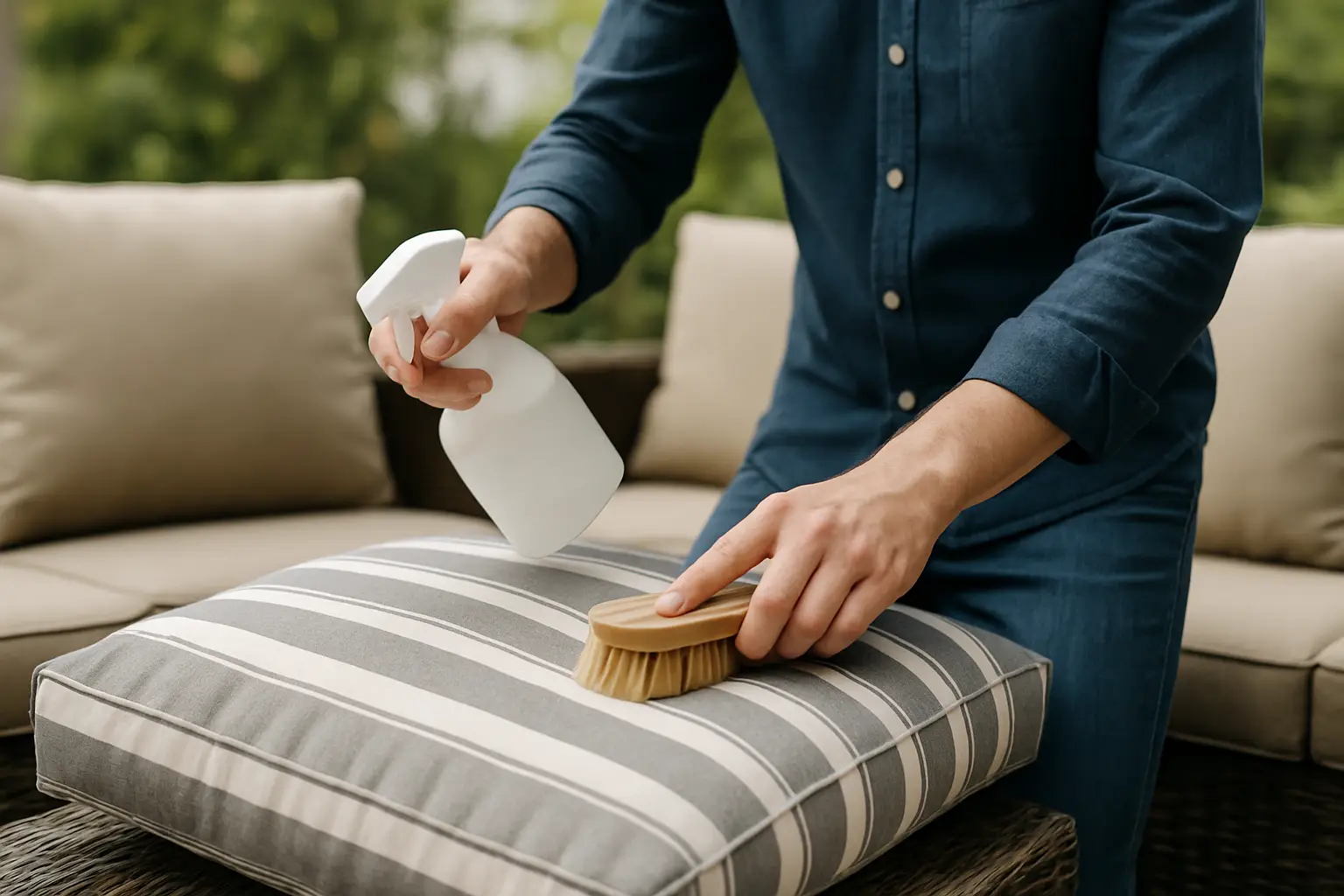
Use a mild detergent or dish soap diluted in water. Apply with a soft-bristle brush and work in overlapping circles, focusing on seams and piping where grime accumulates. Avoid abrasive pads – they can roughen yarns and make the fabric “hold” dirt.
Rinse thoroughly until water runs clear. This step is where teams cut corners, and it is the step that most affects long-term appearance. If you have hard water, a final rinse with filtered water helps reduce mineral spotting on lighter textiles.
Dry completely. In humid climates, “mostly dry” is not dry. Stand cushions on edge to increase airflow, unzip removable covers if possible, and avoid stacking damp items in carts or storage rooms. Trapped moisture is what turns a routine cleaning into a mildew incident.
Pressure washing: when it works and when it backfires
Pressure washing is attractive for speed, but it is not universally safe. It can blow out stitching, distort cushion fill, and force water behind coatings where it takes days to escape.
If you must pressure wash sling seating or coated mesh, use the lowest effective pressure, keep the nozzle at a safe distance, and never concentrate the stream on seams or binding. For woven cushion fabrics, treat pressure washing as a last resort, not a default. The labor you save today can reappear as premature fading, fraying, or seam failures.
Stain removal that protects color consistency
In B2B environments, the problem is rarely one stain – it is repeating stains that create visual inconsistency across a set. A controlled stain protocol protects both the textile and the design intent.
For food and beverage spills, blot first and avoid rubbing. Rubbing spreads the stain and can damage yarns. Use mild soap and water, then rinse.
For oils (sunscreen, body oils, kitchen grease), you often need a degreasing step. Start with mild soap, then escalate only if needed. Strong solvents can lift dye, especially on lower-grade textiles, and can soften coatings on mesh and vinyl.
For rust or metal transfer, be cautious. Rust removers can be effective but are easy to misuse. Test in an inconspicuous area and follow dwell times strictly. If the textile is part of a large installation, it can be more cost-effective to swap a cover than risk a ring or bleach mark that forces broader replacement.
For wine, coffee, and tannins, speed matters. The longer the dwell, the more likely you will need a stronger treatment. Train teams to treat these as same-day issues, not end-of-week tasks.
A realistic escalation ladder for operations
If you manage multiple sites, standardize an escalation ladder: mild soap first, then a dedicated upholstery cleaner approved for outdoor fabrics, then targeted stain treatment only when necessary. Document what is allowed and what is prohibited. Consistency is what prevents one team from using bleach while another uses only soap – and producing visibly different cushions within the same venue.
Mildew: treat the cause, not just the spot
Mildew is common in humid regions, shaded terraces, and any area where cushions stay damp overnight. The stain you see is usually the final stage of a moisture management issue.
First, correct the environment. Improve airflow, adjust housekeeping to stand cushions upright after rain, and avoid tight, non-breathable covers that trap moisture. If furniture must be covered, choose breathable covers and remove them during dry periods.
For treatment, follow the fabric’s care guidance. Some outdoor textiles can tolerate a diluted bleach solution, others cannot. Even when bleach is permitted, overuse can weaken threads and fade color – especially on darker tones. A safer approach is targeted treatment, full rinse, and complete dry, followed by operational changes that keep the problem from recurring.
Protect the finish, but don’t overpromise protectants
Many outdoor textiles ship with a water-repellent finish that reduces absorption and makes cleaning easier. Over time, that finish can wear off in high-use seating zones.
Reapplying a fabric protectant can help, but it depends on the fabric. Some coated textiles do not need it and can become tacky if you add the wrong product. Some woven fabrics accept it well, but only if they are perfectly clean and dry before application. Applying protectant over residue can lock in grime and make future cleaning harder.
If you operate hospitality spaces with frequent turnover, protectants are most valuable on the pieces that take direct spill exposure: dining chair seats, bar stools, and lounge cushions near service points.
Storage and off-season handling for project-scale inventories
If you store cushions incorrectly, you can ruin a season’s worth of textile life in a week. The biggest mistakes are storing damp cushions, compressing them too tightly, and using non-breathable plastic for long periods.
Store only when fully dry. Keep cushions in a ventilated area, off the floor, and spaced to avoid compression lines. If you must bag items for logistics, use breathable packaging and avoid heat exposure in containers where temperatures spike.
For multi-site operators, label and batch by collection and fabric lot. Color drift is real, and mixing lots can make replacements stand out. When you do need to reorder, having clear textile IDs speeds procurement and keeps the site consistent.
Operational controls that reduce replacements
Outdoor textiles last longer when maintenance is designed into the project, not added later. That means removable covers where appropriate, spare covers for high-traffic venues, and standardized cleaning kits at each site.
It also means planning for reality: pool decks will always be wetter, restaurants will always have more staining, and rooftops will always have more dust. Your textile selections and your care SOP should match each zone’s load.
For teams specifying and procuring contract-grade outdoor collections, a vertically integrated partner can support this by providing consistent textile runs, clear care guidance, and mock-ups that let you validate not just comfort and color, but also how the fabric behaves under cleaning. PNZ International supports large outdoor programs with spec control, approval workflows, and project delivery through its end-to-end model at https://www.pnzspace.com.
The trade-offs buyers should expect
There is no textile that is simultaneously the softest, the most stain-proof, the fastest to dry, and the most fade-resistant at the best price. A few practical trade-offs show up repeatedly.
Softer hand-feel often means a more open weave, which can hold onto fine dust and require more frequent rinsing. Tighter weaves resist abrasion and clean up well, but can feel firmer. Dark colors hide stains but show salt and mineral spotting; light neutrals do the opposite. Mesh slings drain fast and reduce cushion handling, but they can show sunscreen sheen and require careful cleaning to avoid streaking.
If you match the textile to the zone and train teams on a simple, repeatable process, you don’t need perfection. You need predictability.
Closing thought: the best-maintained outdoor textiles are not the ones cleaned the hardest – they are the ones supported by a clear spec, a realistic cleaning rhythm, and a storage routine that treats moisture like the real enemy.
