
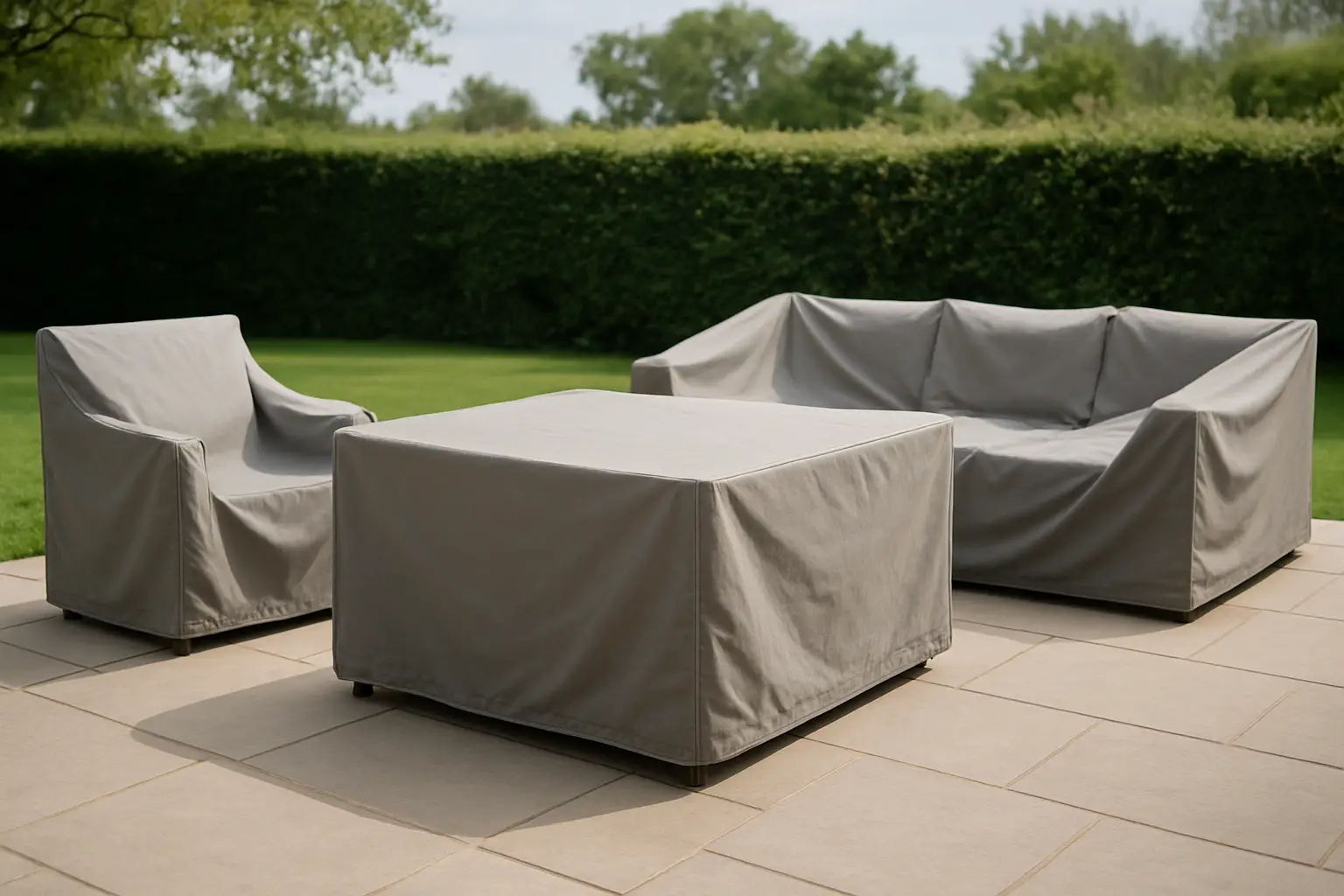
A windstorm doesn’t care that your rooftop lounge was installed last month. It will still drive grit under loose covers, lift corners, and leave you with water lines across cushions by morning. For procurement teams and designers specifying outdoor environments at scale, protective covers are not an afterthought – they are part of the performance spec that protects finish quality, reduces maintenance calls, and extends replacement cycles.
This is how to choose the best outdoor furniture protective covers for real projects: hospitality pool decks, restaurant terraces, villa courtyards, and multi-site communities where uptime and appearance matter.
What “best outdoor furniture protective covers” really means on a jobsite
In residential retail, “best” often means thick fabric and a nice photo. In commercial and hospitality environments, “best” means predictable outcomes: less corrosion on fasteners, fewer water stains on teak, fewer mildew claims on cushions, and fewer service visits triggered by cover failure.
A cover that’s perfect for a mild climate can be the wrong choice for a coastal property with salt spray or a high-wind rooftop where flapping fabric abrades powder coat. The right cover is the one that matches the exposure conditions, the furniture materials, and the way the site is operated (daily uncovering vs seasonal storage).
Start with the exposure profile, not the product name
Before you specify a cover, define what it must withstand. Sun and heat drive fading, brittleness, and seam failure. Coastal air accelerates corrosion when moisture is trapped. Wind turns a loose cover into sandpaper. Tree sap and bird droppings are acidic and can etch finishes if they sit under a damp cover.
If the furniture will be opened and closed daily by staff, prioritize easy handling and fast securement so the cover actually gets used. If it’s seasonal storage, prioritize long-term UV stability, moisture management, and rodent resistance.
Fabric: the real differentiator is the coating and the backing
Most cover fabrics fall into a few families, and the label alone rarely tells you how it will behave after a year outside.
Solution-dyed polyester is common because it balances cost, colorfastness, and flexibility. It performs well in sun-heavy sites, but you still need to check the coating system. A quality PU or similar waterproof coating helps block rain, while a stable backing prevents the fabric from sticking to hot surfaces.
Vinyl or PVC-heavy covers can be highly waterproof, but they tend to trap heat and moisture. In humid or coastal locations, that “sealed” feel can backfire by encouraging condensation and mildew – especially over cushions. Vinyl can also become stiff over time, which makes daily use frustrating for staff.
Acrylic and canvas-style options are breathable and handle UV well, but true waterproofing varies. These can be smart for shaded verandas or covered patios where airflow matters more than total rain protection.
For contract environments, the practical approach is to request fabric specs in writing: material composition, coating type, and basic UV and water resistance statements. If a supplier can’t describe the coating and seam method, you’re guessing.
Water protection: waterproof is only helpful if moisture can escape
Projects often over-index on “waterproof” and forget what happens after the storm. Water runs off, then humidity rises, and trapped moisture sits against the furniture.
Look for controlled water management: a water-resistant outer shell, seams that are taped or bound correctly, and vents that allow humid air to move. The goal is to keep rain out while preventing condensation from becoming a permanent layer.
If you’re covering upholstered seating, consider whether cushions are stored separately. Covers work best when cushion management is part of the operating plan. Leaving cushions under a sealed cover in a humid climate is a reliable way to generate odor complaints, even if the fabric is technically “waterproof.”
Fit: a cover is either secure or it is a sail
Fit is where most covers fail in the field. Too large and the fabric flaps, abrades finishes, and pulls at seams. Too tight and staff stop using it, or it tears at corners.
For lounge seating, deep silhouettes and extended arms require shaped panels, not generic rectangles. For dining, chair stacks need a different geometry than chair-in-place sets. For poolside, chaises with thick cushions need extra height so the cover doesn’t compress the foam and hold moisture.
In procurement terms, you want consistency: the same fit standard across SKUs so staff aren’t improvising with bungee cords and knots.
Securement that holds in wind
In high-wind installations, drawcords alone are not enough. Specify a system that combines hem cords with buckled straps or webbing that wraps under the frame. Elastic hems help with quick placement, but elastic degrades under UV and heat, so it should be reinforced by adjustable straps.
Also consider how the straps interact with the furniture. Metal buckles can scratch powder coat if they swing. Plastic hardware is quieter and safer for finishes, but it must be UV-stable to avoid cracking.
Seam construction: the weak point you don’t see in photos
Seams fail before fabric in many mid-tier covers. Heat, tension, and UV attack stitching, especially along top ridges where water sits.
A better spec includes double stitching in stress zones and seam sealing where the cover is intended to be waterproof. If the cover uses taped seams, the tape quality matters – low-grade tape peels in heat cycles.
If you’re sourcing covers for a multi-site rollout, request a sample and inspect seam consistency. You’re looking for straight stitch lines, reinforced corners, and clean seam binding. These details predict whether you’ll be reordering in 9 months or 3 years.
Lining and finish protection: avoid micro-abrasion
Some finishes – especially matte powder coats and certain wood treatments – show micro-scratches quickly. A cover with a rough interior or a stiff backing can mark surfaces when the wind moves it.
A soft lining or a smooth backing reduces abrasion risk. This matters most on rooftops and coastal properties where wind-driven movement is constant. It also matters for premium teak tops and aluminum frames with textured coatings.
Venting: small feature, big impact
Vents are not decorative. They reduce ballooning in wind and help moisture escape. For humid climates, vents are often the difference between “protected” and “mildew-prone.”
The trade-off is that vents can allow dust ingress in sandy environments. If your site deals with fine dust, favor vent designs that are hooded or downward-facing rather than open mesh panels that act like intake ports.
Matching cover specs to outdoor categories
Because projects are specified by zone, it helps to think in categories rather than one universal cover type.
Lounge seating
Lounge groups typically have the most complex shapes and the most upholstery. Prioritize shaped fit, strong securement, and ventilation. If the seating is modular, consider separate covers per module rather than one oversized cover that staff fights daily.
Dining sets
Dining is about speed and consistency. Covers should be easy to remove and reinstall without dragging over table edges. For table tops that stain (stone, teak, certain composites), a cover that sits off the surface slightly can reduce moisture contact, but it must still secure tightly.
Poolside chaises
Pool environments add chlorine and constant wet traffic. Covers need to handle frequent handling, quick drying, and wind. If chaises are repositioned daily, lightweight but strong fabrics can outperform heavy covers that staff avoids.
Shade solutions and accessories
Umbrella covers benefit from long zippers and strong seam reinforcement at the tip. For side tables and small accessories, overly thick covers can be more hassle than protection; a right-sized, easy-on cover increases compliance.
Warranty, replacements, and the real cost of ownership
For B2B buyers, the cover decision is a cost-of-ownership decision. A cheaper cover that fails after one season increases labor (extra cleaning, finish touch-ups), increases replacement frequency, and creates guest-facing appearance issues.
Ask for a clear warranty statement that includes UV degradation and seam failure, not just “manufacturing defects.” Also ask about replacement continuity. If the cover line changes every year, you’ll end up with mismatched covers across a property.
A practical approach is to order a controlled overage for large projects and store replacements on-site. That prevents procurement delays when a cover is lost or damaged during operations.
Operational details that keep covers working
The best cover fails if it’s treated like a tarp. Train staff to let surfaces cool before covering hot tabletops or metal frames. Heat trapped under a cover accelerates condensation and can stress coatings.
Cleaning matters, too. Covers collect dust and organic debris; if that grime sits wet, it transfers to cushions and tables. A periodic rinse and full dry before re-covering extends cover life significantly.
Storage is the final piece. If covers are removed daily, provide labeled bins or a dedicated storage cabinet. When covers are piled wet in a corner, mildew becomes inevitable and the covers stop being used.
One supplier, one spec: why covers should align with the furniture program
When outdoor furniture is sourced as a program, covers should be specified the same way. The advantage is control: fit matched to each SKU, consistent fabric performance across zones, and fewer unknowns during installation and handover.
For teams sourcing contract-grade outdoor packages, PNZ International (https://www.pnzspace.com) supports end-to-end projects with design coordination and specification control – and that same procurement discipline is what makes cover decisions pay off: fewer surprises, fewer replacements, and cleaner outdoor spaces that stay guest-ready.
A helpful way to close out a cover spec is to walk the site like an operator: imagine the windiest day, the busiest turnover, the quickest staff member trying to cover furniture before a storm. If the cover choice still works in that scenario, you’re not just buying protection – you’re buying consistency.
